Let's Have a Chat

 menu
menu


All-on-4 is a well-established and widely used treatment, and most patients experience only temporary side effects such as swelling, bruising and mild discomfort in the first days. Less common problems include infection, gum inflammation and, rarely, implant failure. Careful planning, good oral hygiene and regular check-ups keep these risks low.
This guide explains what is normal after surgery, which complications are possible, who may have a higher risk and how you can protect your results.
Key facts
Most issues after All-on-4 dental implants are short-term and part of normal healing. A smaller number need professional attention.
Swelling usually peaks around the second or third day after surgery and then fades gradually. Some patients also notice bruising on the cheeks or jaw. Discomfort is generally manageable with the pain relief your dentist prescribes, along with cold compresses in the first 48 hours.
The gums around new implants need time to heal. If bacteria build up during this period, the area can become inflamed or infected. Signs include increasing pain after the first few days, pus, fever or a bad taste. Infections are usually treated with cleaning and, when needed, antibiotics.
In a small number of cases, an implant does not fuse fully with the bone. This is most likely in the first months, while the bone is still healing around the implant. The prosthesis can also have mechanical issues over time, such as a loose screw or a chipped tooth, which are usually straightforward to repair.
A precise fit reduces these mechanical risks. When a bridge does not sit perfectly on the implants, chewing forces are spread unevenly, which can loosen screws and strain the implants over time. This is why Esvita measures implant positions with iCam4D photogrammetry and builds every permanent bridge on a milled titanium bar, using the implant manufacturer’s original connection design files.
Like any dental implant treatment, All-on-4 needs ongoing care. Most long-term risks are linked to hygiene and lifestyle, which means patients can influence them.
Peri-implantitis is an inflammation of the gum and bone around an implant. It develops slowly, often without pain, and can reduce the bone support around the implant if left untreated. Daily cleaning and professional check-ups are the best protection.
Implant failure is uncommon. Long-term follow-up studies show that most All-on-4 implants remain in function for ten years and beyond. In a study that followed 1,884 lower-jaw implants for 10 to 18 years, 93% of the implants and 98.8% of the bridges were still in use. Mechanical issues, such as wear on the bridge or loosened screws, are more frequent than implant loss and can usually be fixed without replacing the implants.
Some health conditions and habits make healing slower or less predictable. Your dentist assesses these before recommending a treatment, and may also discuss All-on-4 vs All-on-6 dental implants depending on your bone and bite.
| Risk factor | Why it matters | What can help |
|---|---|---|
| Smoking | Reduces blood flow and slows healing | Stopping before and after surgery |
| Uncontrolled diabetes | Slows healing and raises infection risk | Good blood sugar control before treatment |
| Existing gum disease | Bacteria can spread to the implant sites | Treating gum disease first |
| Limited bone support | Implants need enough bone to stabilise | 3D planning, angled implants or grafting |
| Teeth grinding (bruxism) | Adds extra load on the implants and bridge | A night guard and regular checks |
| Poorly fitting bridge | Puts uneven pressure on the implants | Precise digital measurement and a titanium framework |
Smoking is one of the strongest risk factors for implant problems. Uncontrolled diabetes and active gum disease also affect healing. None of these automatically rule out treatment, but they need to be managed and discussed openly with your dentist.
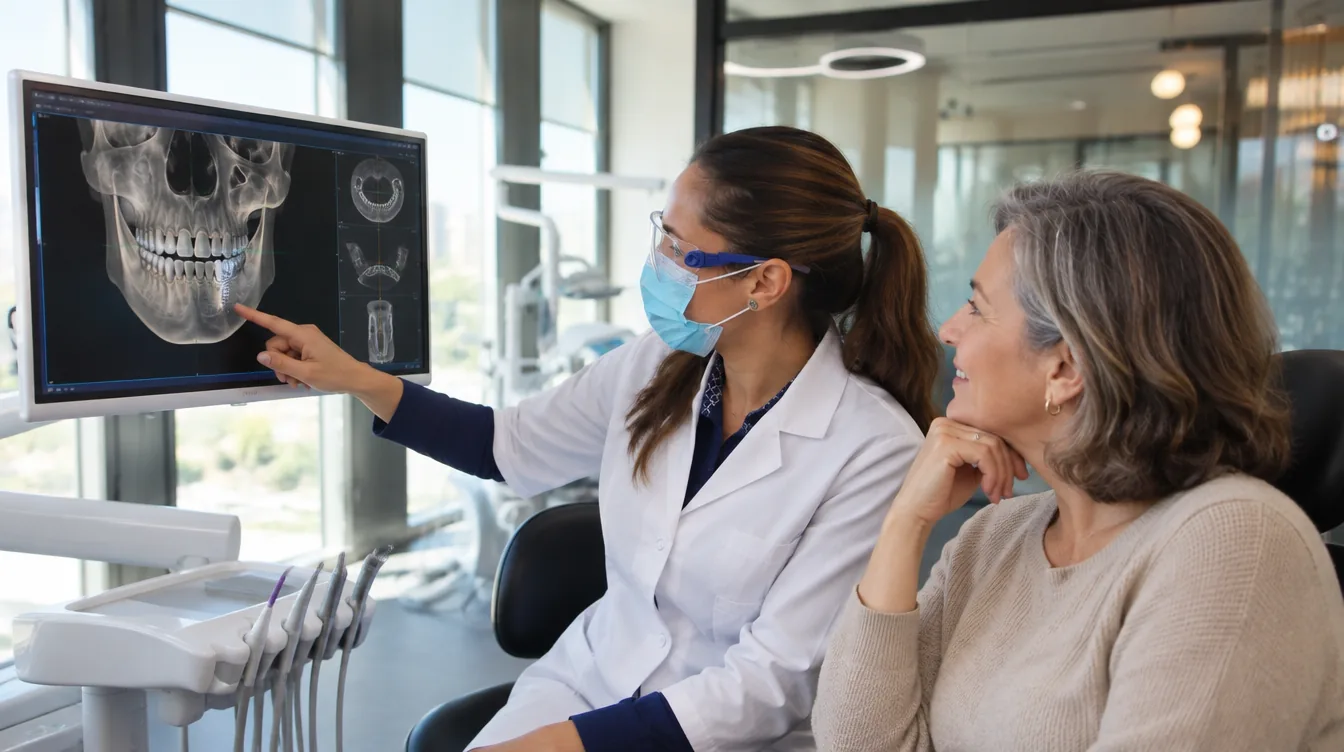
Implants need enough healthy bone for stability. A CBCT scan shows how much bone is available, so your dentist can plan implant positions or suggest additional procedures. Certain medications that affect bone and past radiation therapy to the jaw also need careful evaluation.
Your own routine plays a large part in long-term success. A guide to cleaning All-on-4 dental implants covers the daily steps in detail.
Brush the bridge and gumline twice a day, clean beneath the bridge daily with a water flosser or interdental brushes, and attend professional cleanings. This routine keeps plaque away from the gums and bone around the implants.
The first months after surgery matter most, because the implants are still fusing with the bone. At Esvita, patients do not wear fixed temporary teeth during this period. They receive temporary teeth for social occasions only, because implants heal best when they are kept free of pressure. Patients then return to Istanbul about 3 months later for their final bridge.
“In the first three months, the implants are bonding with the bone, and pressure is what disturbs that process most. That is why we do not fit fixed temporary teeth after surgery. Letting the implants heal without load gives them the strongest foundation for the years ahead.”
Esvita Clinic Head of Dentistry
Yes, if they are left untreated. When problems are managed early, most patients keep their implants for many years. For a full overview, see how long All-on-4 implants last.
Ongoing inflammation can slowly reduce the bone around an implant, and less bone means less support. Mechanical issues such as a loose screw can also put uneven pressure on the implants if they are not fixed.
Regular check-ups let your dentist spot early signs of inflammation, tighten or replace worn parts and clean areas you cannot reach at home. This maintenance is what keeps small issues small. Esvita’s bridges are screw-retained rather than cemented. Your dentist can remove the bridge for cleaning, checks or repairs without damaging it, and no cement is left under the gums, where it could irritate the tissue.
Both are established treatments with similar safety profiles in suitable patients. The better option depends on your bone and bite, and All-on-6 dental implant treatment may be recommended when extra support is helpful.
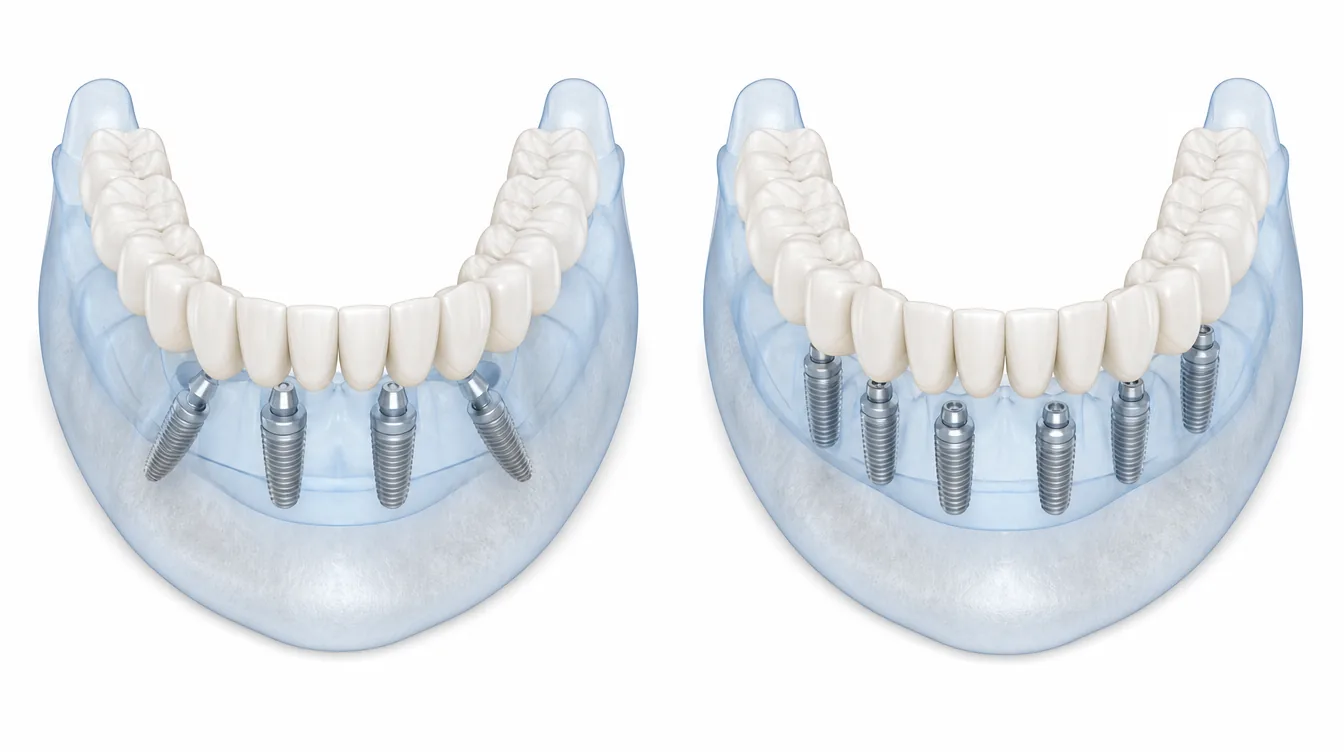
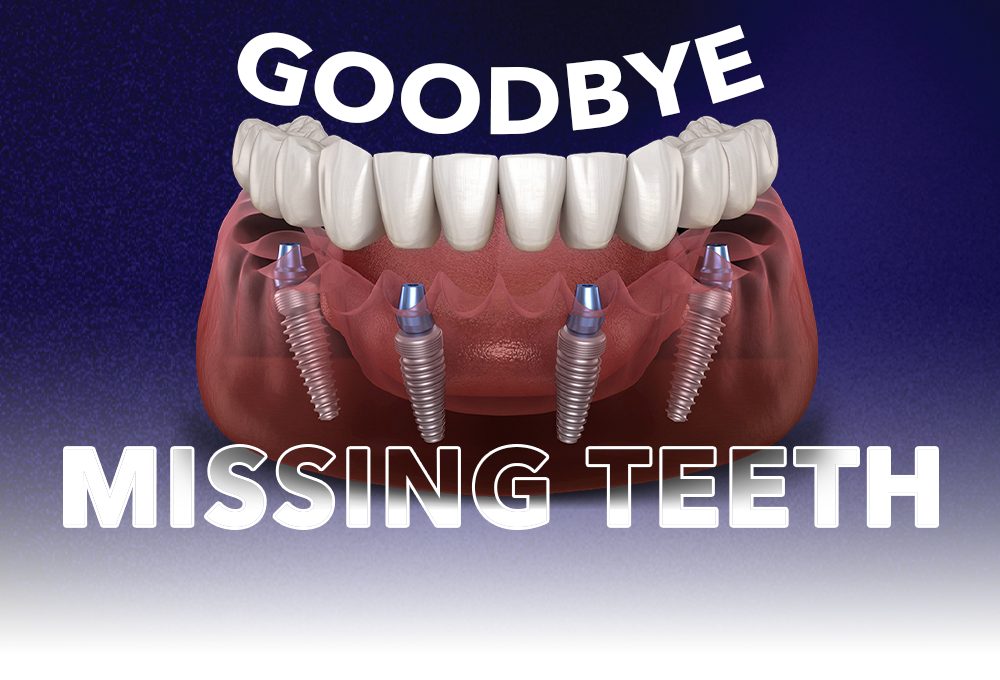
All-on-4 uses two upright front implants and two angled rear implants. All-on-6 spreads six implants along the arch, which shares chewing forces across more points. All-on-6 usually needs more bone, while All-on-4 can often avoid bone grafting.
Safety comes from the right plan for your jaw, not from the number of implants. A CBCT scan, a review of your medical history and an assessment of your bite help your dentist choose the option with the most predictable result for you.
Want to know if All-on-4 is a safe option for you? Send us your photos or X-ray for a free online assessment.
Contact your dentist whenever something feels different from your normal healing. After you return home, your Esvita medical consultant stays in touch with you by WhatsApp and phone. If you would like to speak to your doctor, we can arrange an online meeting.
Most complications are easier and less costly to treat when caught early. A quick message to your dental team can prevent a small issue from becoming a bigger one.
Implant failure is possible but uncommon. It is most likely in the first months of healing or in patients with risk factors such as smoking or poor oral hygiene. When an implant does fail, it can often be replaced after the area heals.
Yes. Swelling is a normal part of healing and usually peaks around day two or three. It then fades over the following week or two. Swelling that gets worse after the third day should be checked by your dentist.
Gum inflammation can develop around implants if plaque is not removed regularly. Daily cleaning beneath the bridge and regular professional cleaning help keep the gums healthy.

As our basic philosophy, we prioritize the long-term happiness and
satisfaction of our patients above all else.


Contact with our experts and learn about your options! Or fill the form right side and we will call you