


















Do Women Need to Shave Their Head for a Hair Transplant?

Key facts
- Women do not usually need to shave their whole head for a hair transplant.
- At Esvita Clinic, female hair transplants are performed with the DHI technique without shaving the recipient area, where the new hair is placed.
- In the donor area, a small section is usually trimmed and hidden under longer hair.
- The unshaven DHI approach is suitable for many women, but graft count and donor hair must be assessed first.
- At Esvita Clinic, the unshaven female procedure is priced the same as a single DHI session.
Is Shaving Necessary for Female Hair Transplants?
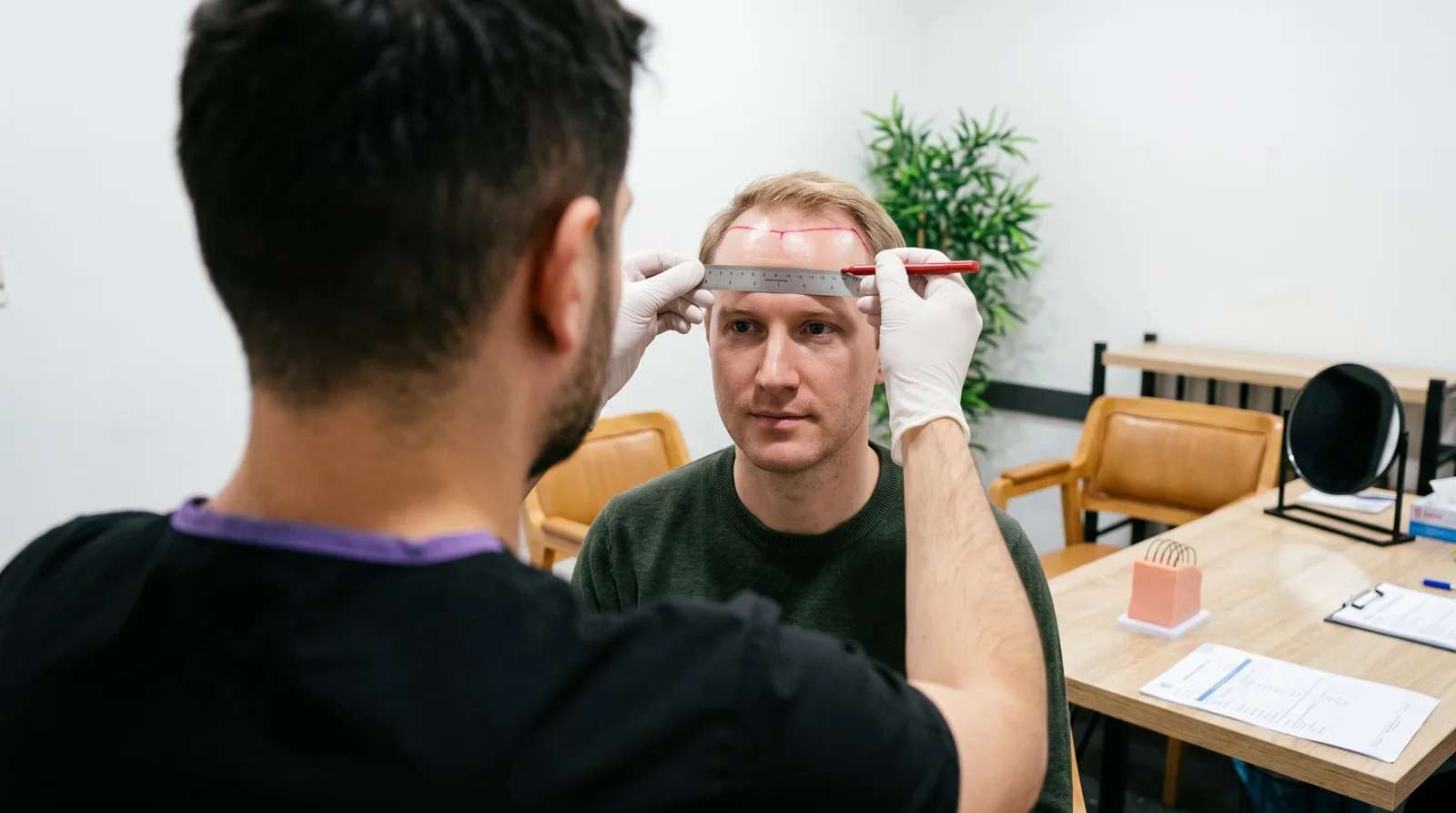
For many women, the thought of shaving their head is the biggest worry about having a hair transplant. If you are wondering whether you can get a hair transplant without shaving your head, the good news is that for many women you can, and full-head shaving is rarely needed. In a female hair transplant, the aim is usually to add density to a widening parting, thinning crown or a high hairline, and these areas can often be treated while the surrounding hair is kept at its normal length.
Why Some Hair Transplant Procedures Require Shaving
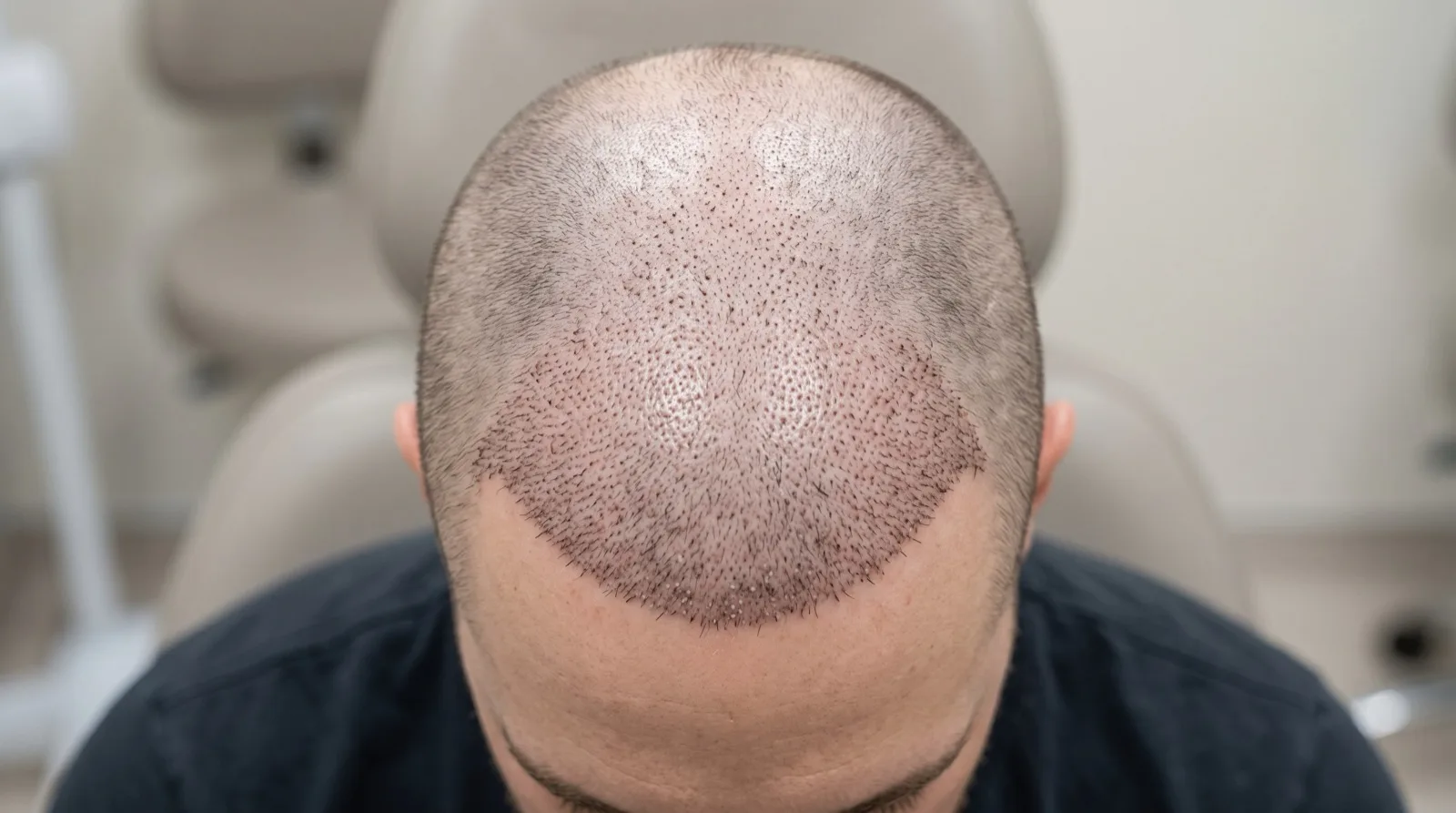
Shaving gives the surgical team a clear view of the scalp. It makes it easier to extract follicles evenly from the donor area and to open channels at the right angle in the recipient area. For very large procedures, especially in men with extensive hair loss, shaving is often the most practical option.
When Partial or No Shaving May Be Possible
When the area to be treated is limited and the number of grafts is moderate, shaving the recipient area is often unnecessary. Female hair loss is usually diffuse thinning rather than complete baldness, so grafts are placed between existing hairs. In these cases, an unshaven technique can give good results while keeping the change in appearance to a minimum.
What Is an Unshaven Hair Transplant?
How Unshaven Hair Transplantation Works
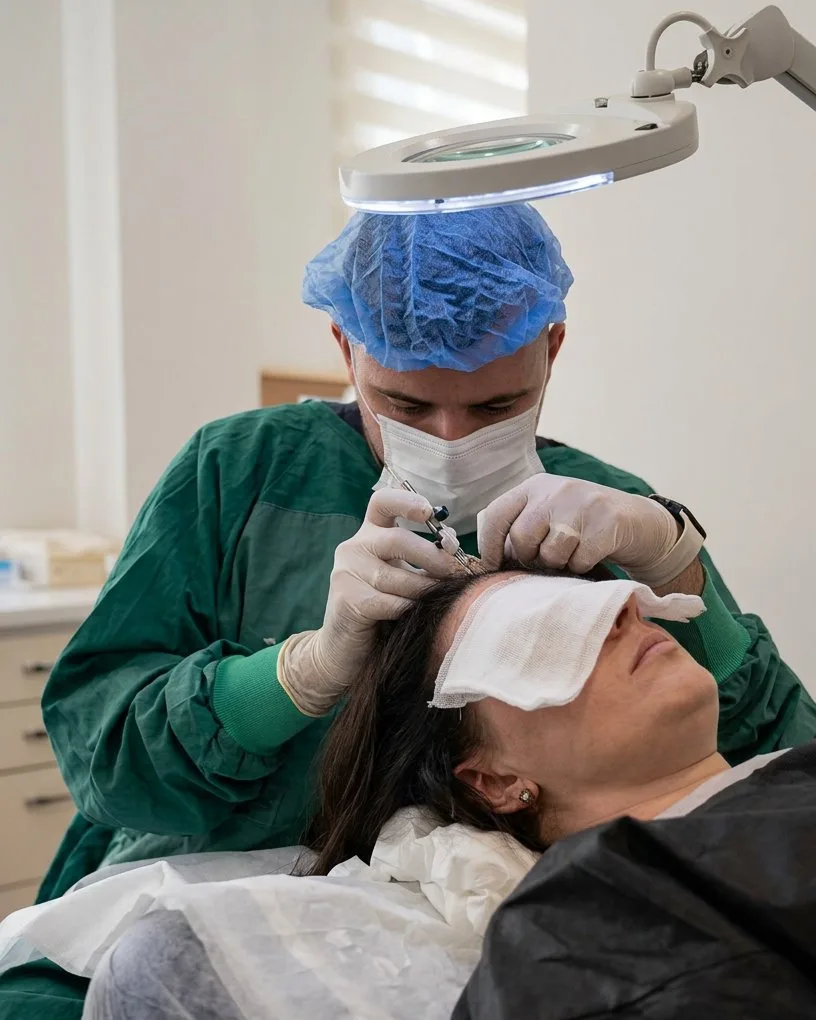
“Unshaven” can mean different things.[1] At Esvita Clinic, the female DHI approach described here keeps the recipient hair long while a donor section is usually trimmed and hidden by longer hair. Fully unshaven donor harvesting is a different option and is not implied by this description.
Limitations of the Technique
Working between long hairs is technically demanding, and the safe number of grafts depends on donor density, hair length and the area treated. Esvita Clinic’s stated single-DHI capacity is up to 4,000 grafts; this does not mean that a small hidden donor window is suitable for that number in every patient.[1]
What Are the Differences Between Shaved and Unshaven Hair Transplants?
| Shaved approach | Unshaven DHI approach | |
|---|---|---|
| Recipient area | Shaved | Kept at normal length |
| Donor area | Shaved | Small trimmed section, hidden by hair |
| Visibility after surgery | Clearly visible for weeks | Much easier to conceal |
| Graft count per session | Can be higher | Up to around 4,000 grafts with single DHI |
| Procedure time | Shorter | Slightly longer, more precise work |
Visibility and Access to the Donor Area
With a shaved procedure, the team has unrestricted access, but the result is visible to others while the hair grows back. With an unshaven approach, the donor section is small and covered by surrounding hair, so most people will not notice it.
Graft Count and Treatment Complexity
The more grafts needed, the more difficult it becomes to work without shaving. This is why the extent of hair loss is one of the first things assessed.
Recovery and Appearance During Healing
The recovery process is similar for both approaches. The main difference is appearance: with an unshaven procedure, many women can return to normal social life sooner because the treated area is hidden by existing hair.
Can Women Have a Hair Transplant Without Shaving the Donor Area?
Partial-Shave Hair Transplant Options
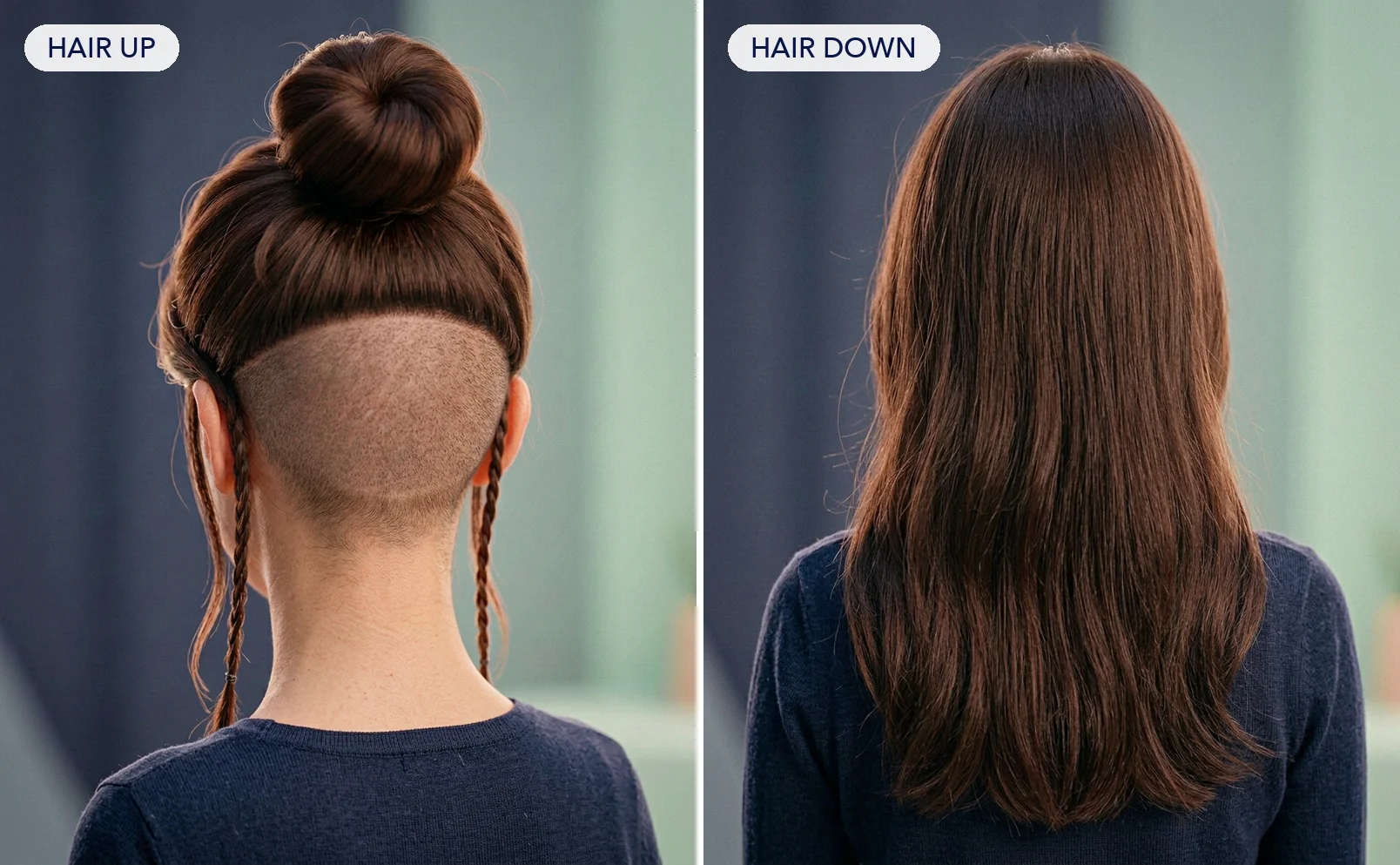
The donor area usually needs some trimming so that follicles can be extracted cleanly. In women, this is often a narrow strip at the back of the head, positioned so that the hair above falls naturally over it. Once the hair is down, the trimmed section is usually not visible.
Factors That Determine Eligibility
Eligibility depends on the number of grafts needed, the density of the donor area, hair length and thickness, and the cause of hair loss. Long hair makes it easier to cover the trimmed donor section.
Which Hair Transplant Techniques Can Be Used Without Full-Head Shaving?
FUE Hair Transplantation
FUE harvesting can be performed with a fully shaved, partially shaved or unshaven donor area in suitable cases. The recipient area can also be shaved or left long. Sapphire blades describe an instrument used at the recipient stage; shaving is a separate planning decision.[1]
DHI and Other Implantation Approaches
DHI is the preferred technique for unshaven female hair transplants at Esvita Clinic. The implanter pen opens the channel and places the graft in one step, which makes it well suited to working between existing hairs and controlling the angle and direction of growth.[3]
Who Is a Suitable Candidate for an Unshaven Hair Transplant?
Hair Loss Pattern and Donor Hair Availability
Good candidates usually have thinning in a defined area, such as the parting, the hairline or the crown, and enough healthy donor hair at the back of the head. Women with widespread thinning across the whole scalp, including the donor area, may not be suitable for any type of transplant.[2]
Why an Individual Assessment Is Necessary
Female hair loss can have many causes, including hormonal changes, thyroid conditions, iron deficiency and autoimmune conditions. These need to be understood before surgery. Esvita Clinic guarantees graft survival, except in patients with underlying conditions such as hormonal disorders or alopecia areata, where grafts may not take. This is discussed openly and the patient’s consent is taken before treatment.
How Does Recovery Differ After an Unshaven Hair Transplant?
Caring for Existing and Transplanted Hair
Existing hair needs to be handled carefully so that it does not pull on new grafts. Avoid brushing over the transplanted area, tying hair tightly or using clips near the grafts in the first weeks.
Scalp Healing and Washing Instructions
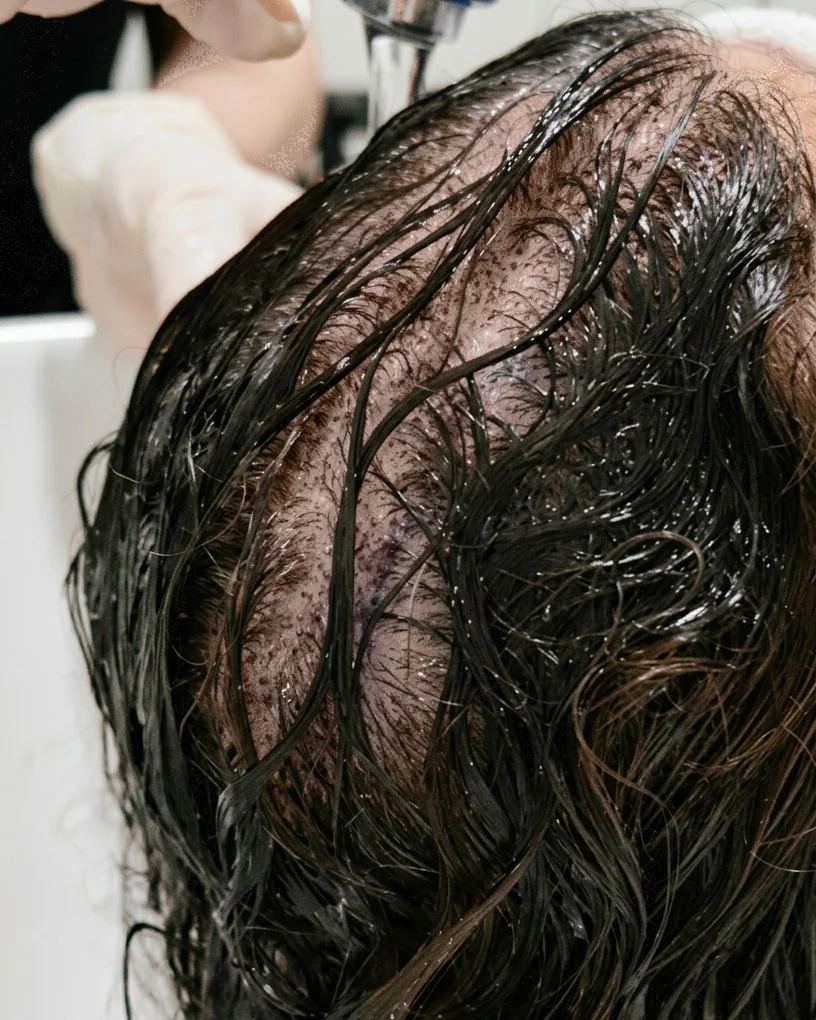
The first wash is carried out at the clinic the day after the procedure, and you will be shown how to wash gently at home. For a detailed week-by-week guide, read our article on female hair transplant recovery.
Does an Unshaven Hair Transplant Cost More?
Technique and Procedure Complexity
At many clinics, unshaven procedures cost more because they take longer. At Esvita Clinic, the unshaven female hair transplant uses the DHI technique and is priced the same as a single DHI session.
Graft Requirements and Treatment Planning
The final price depends on your treatment plan, including the number of grafts and whether more than one session is needed. Your plan and price are shared after your assessment.
“For most women, keeping their hair long is a key part of feeling comfortable with the treatment. With DHI we can place grafts between existing hairs, so the treated area is hard to notice even in the first days.”
Esvita Clinic Head of Hair Restoration
Frequently Asked Questions About Female Hair Transplants Without Shaving
Can You Keep Long Hair During a Hair Transplant?
Yes. With the unshaven DHI technique, the hair in the recipient area stays at its normal length. Only a small section of the donor area is trimmed, and long hair helps to cover it.
Is an Unshaven Hair Transplant Suitable for Every Woman?
No. It depends on the size of the area, the number of grafts, donor hair quality and the cause of hair loss. An individual assessment is needed to confirm suitability.
Are Results Different With Shaved and Unshaven Procedures?
When the technique is suitable for the patient, the results can be similar. The main difference is how the scalp looks during the healing period, not the final outcome.
Sources
Sources accessed on 28 October 2026. Reference numbers in the text link to the source pages.
1. International Society of Hair Restoration Surgery. Shaven and un-shaven hair transplant terminology.
2. International Society of Hair Restoration Surgery. A guide to hair transplant for women.
3. International Society of Hair Restoration Surgery. A guide to surgical hair restoration treatments.