














Hollywood Smile Shades: A1 vs B1 and Natural-Looking Results
Key facts
- A1 and B1 are shades from the VITA classical shade guide, one of the most widely used tooth colour systems in dentistry.
- B1 is the lightest shade in the classical guide. A1 is very slightly darker and has a warmer, reddish-brown undertone.
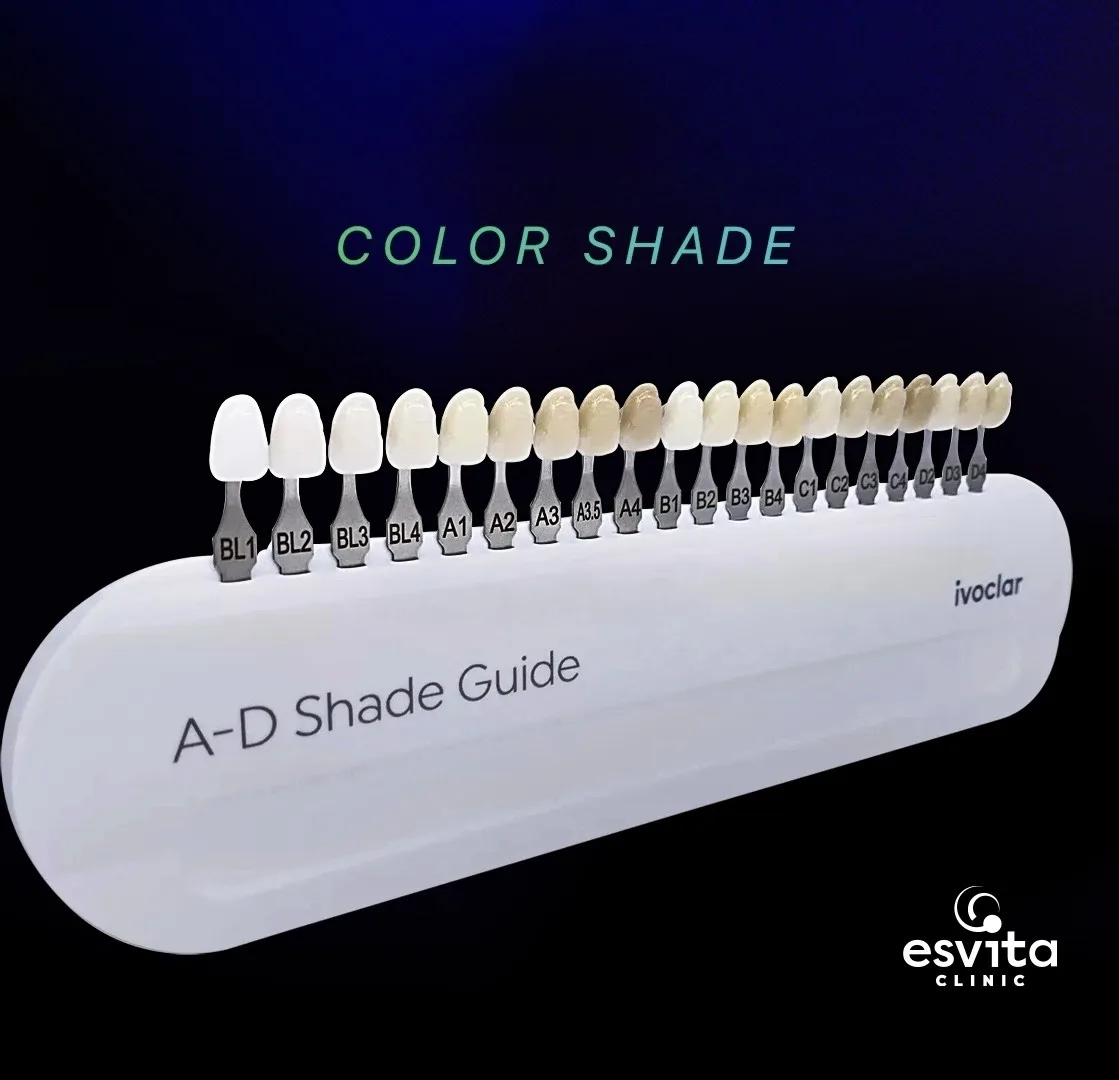
- A1 and B1 belong to the VITA classical natural-shade guide. Bleach labels such as BL1 to BL4 belong to other shade systems, including Ivoclar’s Bleach BL range.
- Many Esvita Clinic patients choose BL1 or BL2 for a bright white smile, while BL3, BL4, A1 and B1 give a softer, more natural look.
- The right shade depends on your skin tone, your face, any natural teeth that stay visible and your personal preference.
What Do A1 and B1 Mean in Dental Shade Guides?
When you plan a smile makeover, your dentist will show you a shade guide: a set of small tooth-shaped samples in different colours. A1 and B1 are two of the lightest natural shades in this guide, and they are among the most common choices for patients who want a bright but realistic smile.
How Dental Shade Systems Work
The VITA classical shade guide groups tooth colours into four hue families:[1]
| Group | Undertone | Shades |
|---|---|---|
| A | Reddish-brown | A1, A2, A3, A3.5, A4 |
| B | Reddish-yellow | B1, B2, B3, B4 |
| C | Grey | C1, C2, C3, C4 |
| D | Reddish-grey | D2, D3, D4 |
Within each group, a lower number means a lighter shade. A1 is the lightest in group A, and B1 is the lightest in group B.
Understanding Tooth Shade, Brightness and Undertones
Tooth colour has three main parts. Brightness, sometimes called value, describes how light or dark a tooth looks. Hue describes the undertone. Chroma describes how strong or saturated the colour is. Brightness has the biggest effect on how white a smile looks, while the undertone affects how warm or cool it looks.
A1 vs B1 Tooth Colour: What Are the Differences?
A1 Tooth Shade Characteristics
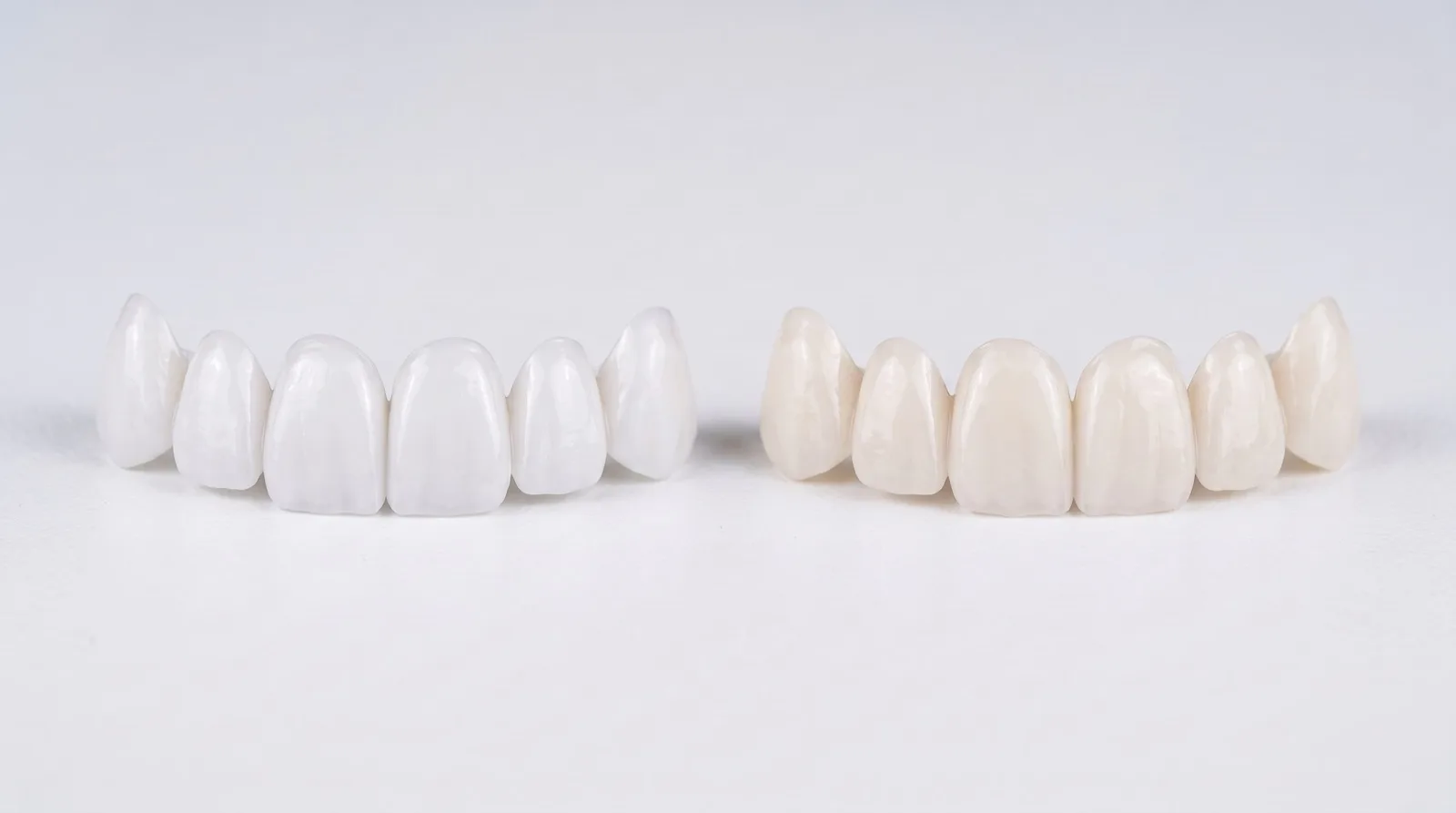
A1 is a light shade with a gentle warm undertone. It looks bright but natural, and it often blends well with natural teeth and warmer skin tones.
B1 Tooth Shade Characteristics
B1 is the lightest shade in the VITA classical guide. It has a slightly yellow-based undertone with very low saturation, so it appears cleaner and whiter than A1. In everyday conversation, the difference between the two is small, but it can be noticed when teeth are compared side by side.[2]
How Lighting and Dental Materials Affect Appearance
The same shade can look different under daylight, warm indoor light or camera flash. Materials also matter: E-max ceramics are translucent and reflect light much like enamel, while zirconia tends to look slightly more opaque. This is why shade selection is checked in natural light and confirmed with the materials that will be used.
Which Hollywood Smile Shade Looks More Natural?
Skin Tone and Facial Features
Skin tone can influence the visual impression, but it does not determine a single correct shade. Compare physical shade tabs, visible natural teeth and the planned restoration under suitable lighting before choosing.
Existing Teeth and Smile Harmony
If some of your natural teeth will remain visible, the new teeth need to match them or be close enough not to stand out. Some patients whiten their natural teeth before treatment so a lighter shade can be chosen.
Personal Preferences and Treatment Goals
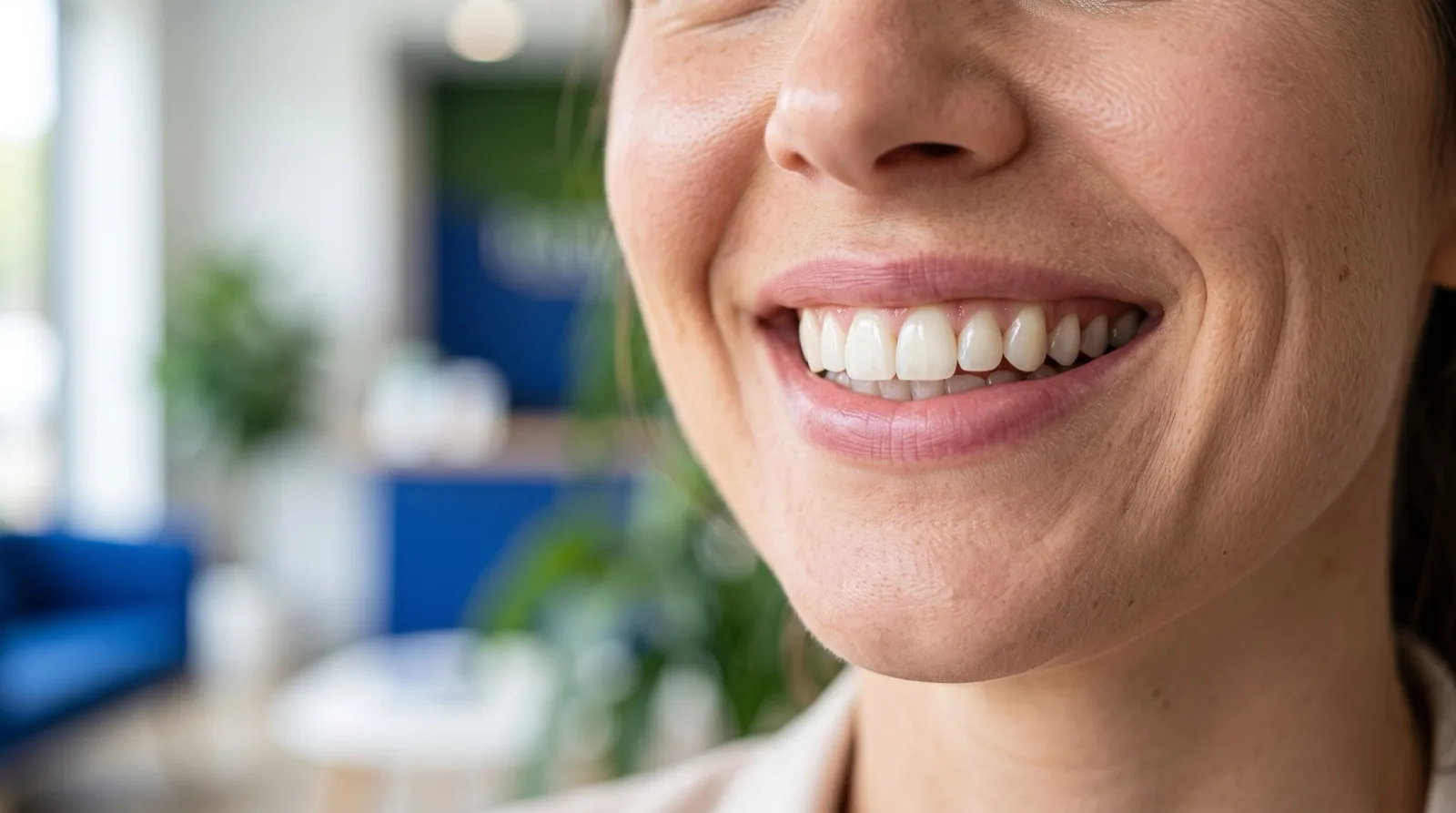
Some patients want a striking, bright white smile, while others want people to notice that they look well without realising they have had treatment. Both are valid goals, and your shade choice should reflect what you want.
Are A1 and B1 the Whitest Tooth Shades?
Natural Shade Guides vs Bleach Shades
A1 and B1 are among the lightest shades in the VITA classical guide. Ivoclar offers a separate Bleach BL range, BL1 to BL4, for brighter restorations. These labels should be checked against the actual shade guide and ceramic system rather than treated as a universal colour scale.[3] At Esvita Clinic, many patients choose BL1 or BL2; others prefer BL3, BL4, A1 or B1.
| Shade | Look |
|---|---|
| BL1 | Brightest, very white “Hollywood” look |
| BL2 | Very bright, slightly softer |
| BL3 and BL4 | Bright but closer to natural teeth |
| B1 | Lightest natural shade |
| A1 | Light natural shade with a warmer tone |
Why Brighter Is Not Always More Suitable
The brightest shade does not suit everyone. Very white teeth can look artificial if they do not match the face, the shape of the teeth or the gum line. A shade that fits well usually looks better in photos and in person than a shade that is simply as white as possible.
How Are Tooth Shades Selected for Veneers and Crowns?
Clinical Shade Assessment
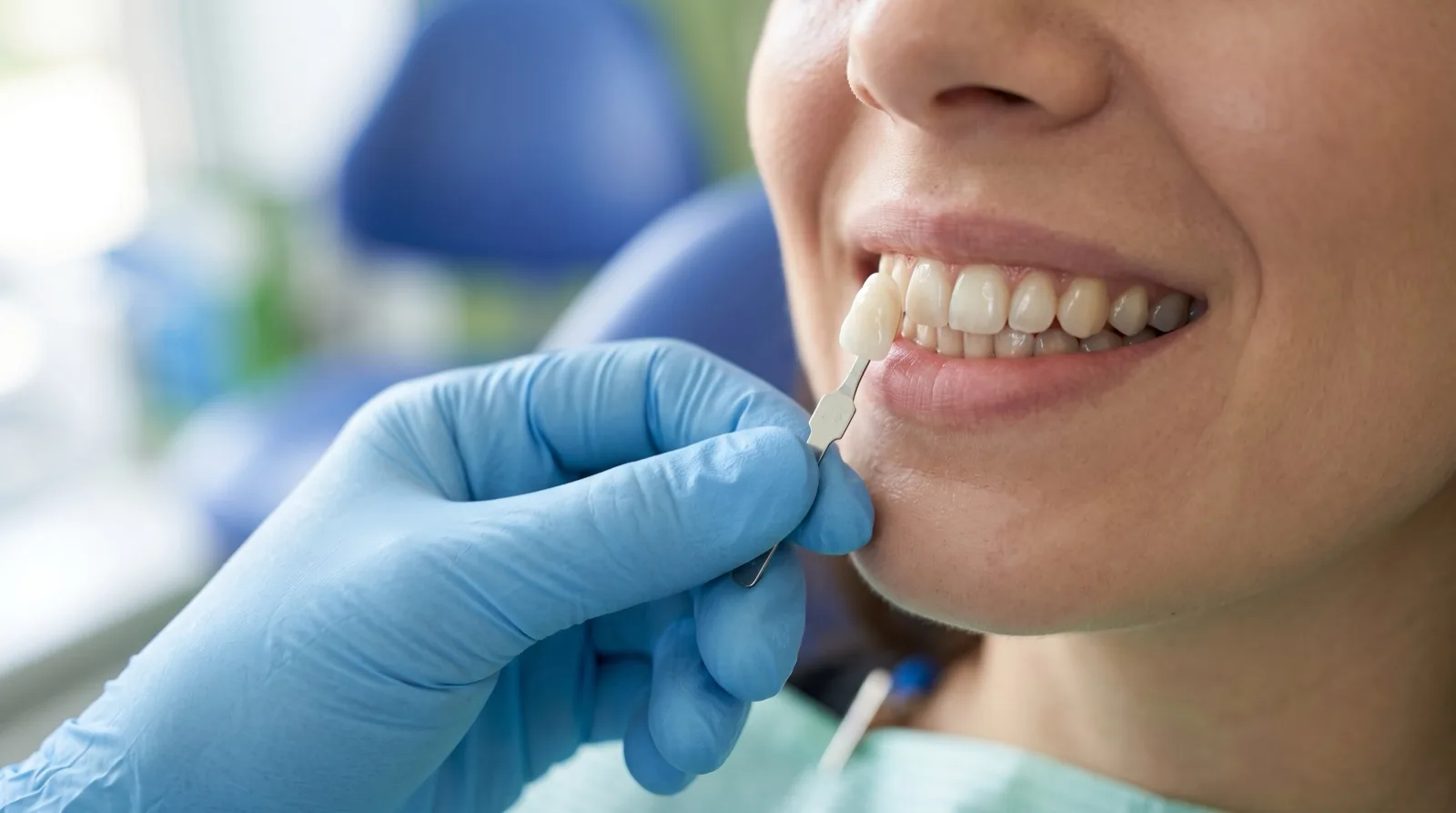
Online images and screen colours are illustrations, not reliable shade-matching tools. The final choice should be made with physical shade samples and the actual material under controlled clinical lighting.
The dentist compares shade samples against your teeth and face in natural light. Your preferences, your skin tone and any visible natural teeth are all considered.
Digital Smile Design and Visual Planning
Digital planning tools and photos help you see how different shapes and colours may look before treatment begins. This makes it easier to choose with confidence.
Differences Between Ceramic Materials
Esvita Clinic uses E-max laminate veneers, E-max crowns and zirconia crowns. E-max is valued for its natural translucency, while zirconia offers high strength, especially for teeth that need more support. The material can slightly change how a shade appears, so this is considered during planning.
Can You Change the Shade of Veneers After Treatment?
Colour Stability and Staining
Ceramic veneers and crowns are highly resistant to staining from coffee, tea and red wine. Their colour stays stable for many years, although surface stains can build up and should be cleaned professionally.
Why Veneers Cannot Be Whitened Like Natural Teeth
Whitening can lighten natural teeth, but it does not change the underlying colour of ceramic veneers or crowns. A substantial change in restoration shade generally means replacing the restoration, which is why shade selection should be settled before treatment.[4]
How Does Tooth Shade Selection Affect Hollywood Smile Planning?
Shade is one of the first decisions in Hollywood Smile treatment, and it influences the choice of material and the number of teeth treated. At Esvita Clinic, Hollywood Smile treatment usually covers at least 16 teeth, so the colour is consistent across the smile.
Choosing Tooth Colour Before Treatment
Think about how you want your smile to look in daily life, at work and in photos. Bring examples of smiles you like, and discuss them with your dentist during planning.
Balancing Aesthetic Goals and Natural Appearance
The best result balances brightness with harmony. If you are still deciding which treatment is right for you, our guide to Hollywood Smile vs veneers explains how the two compare.
“The brightest shade is not always the most attractive one. I look at skin tone, the shape of the face and any natural teeth that will stay visible. A shade that suits the face looks natural, even when it is bright.”
Esvita Clinic Head of Dentistry
Frequently Asked Questions About Hollywood Smile Shades
Is B1 Whiter Than A1?
Yes. B1 is slightly lighter than A1 and has a cleaner, less warm undertone. The difference is subtle and is easiest to see side by side.
Do Hollywood Smile Teeth Have to Be Very White?
No. Many patients choose very bright BL1 or BL2 shades, but softer shades such as BL3, BL4, A1 or B1 can create a natural-looking Hollywood Smile.
Can Different Tooth Shades Be Combined?
Natural teeth often vary slightly in colour, so a skilled ceramist can add subtle variation, for example slightly more translucent edges. Large shade differences between neighbouring teeth, however, usually look unnatural and are generally avoided.
Sources
Sources accessed on 28 October 2026. Reference numbers in the text link to the source pages.
1. VITA Zahnfabrik. VITA classical A1–D4 shade guide: product information.
2. Dentalcare continuing education, course 690. Shade selection using the VITA classical shade guide.
3. Ivoclar. A–D shade guide with 16 basic shades and four Bleach BL shades, product 628587.
4. American Dental Association. Whitening: oral health topics.