Let's Have a Chat

 menu
menu



Key facts
Recovery after female hair transplant treatment takes place in two areas: the donor area, where follicles were taken, and the recipient area, where they were placed. Both heal relatively quickly on the surface, while the hair itself grows back over several months.
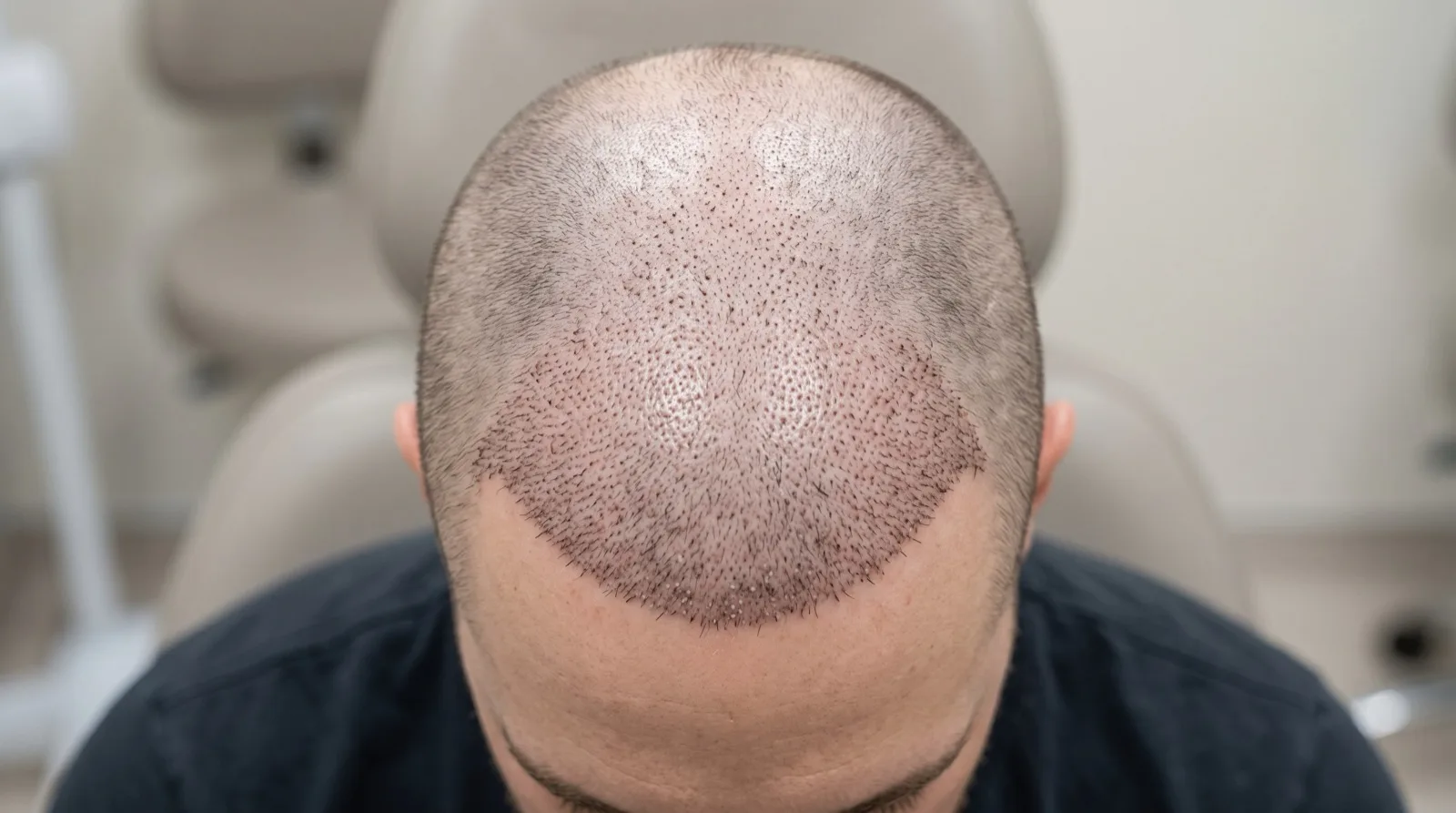
The donor area at the back of the head may feel tender for a few days, and small red marks are visible where follicles were extracted. In the recipient area, tiny scabs form around each graft. Because the surrounding hair is kept at its normal length in an unshaven procedure, these marks are usually hidden.
Healing speed varies between women. Skin type, the number of grafts, general health, hormonal factors and how closely aftercare instructions are followed all play a role.

Mild tenderness and tightness are common in the first days. Some women notice swelling on the forehead between the second and fourth day, which can move towards the eyes before it settles. Sleeping with the head raised, using the neck pillow included in the Esvita Clinic package, helps reduce this.
At Esvita Clinic, the first wash and the first check take place at the clinic the day after the procedure. You will be shown how to wash gently with the special shampoo provided. During the first week, avoid touching or scratching the grafts, and keep your existing hair away from the treated area so it does not pull on new grafts.
With regular gentle washing, the small scabs usually fall away within 10 to 14 days. Any redness fades gradually. By the end of the first month, the scalp generally looks calm again.[3]
Transplanted hair shafts can shed during the weeks after surgery before growth resumes. This shedding period can overlap the later stages of skin healing, so hair shedding and scab clearance should not be treated as the same event.[1]
Existing hair near the recipient area can also shed after surgery, a response called shock loss. It often recovers, but hairs that were already severely weakened may not return to their previous density. Tell your team about marked or persistent shedding.[4]
| Time after surgery | What to expect |
|---|---|
| Day 1 | First wash and check at the clinic |
| First week | Mild tenderness, possible swelling |
| First 2 weeks | Scabs generally clear; protect the scalp as instructed |
| Months 3 to 6 | New hair starts to grow |
| Months 6 to 12 | Noticeable improvement in density |
| Months 12 to 18 | Final result |
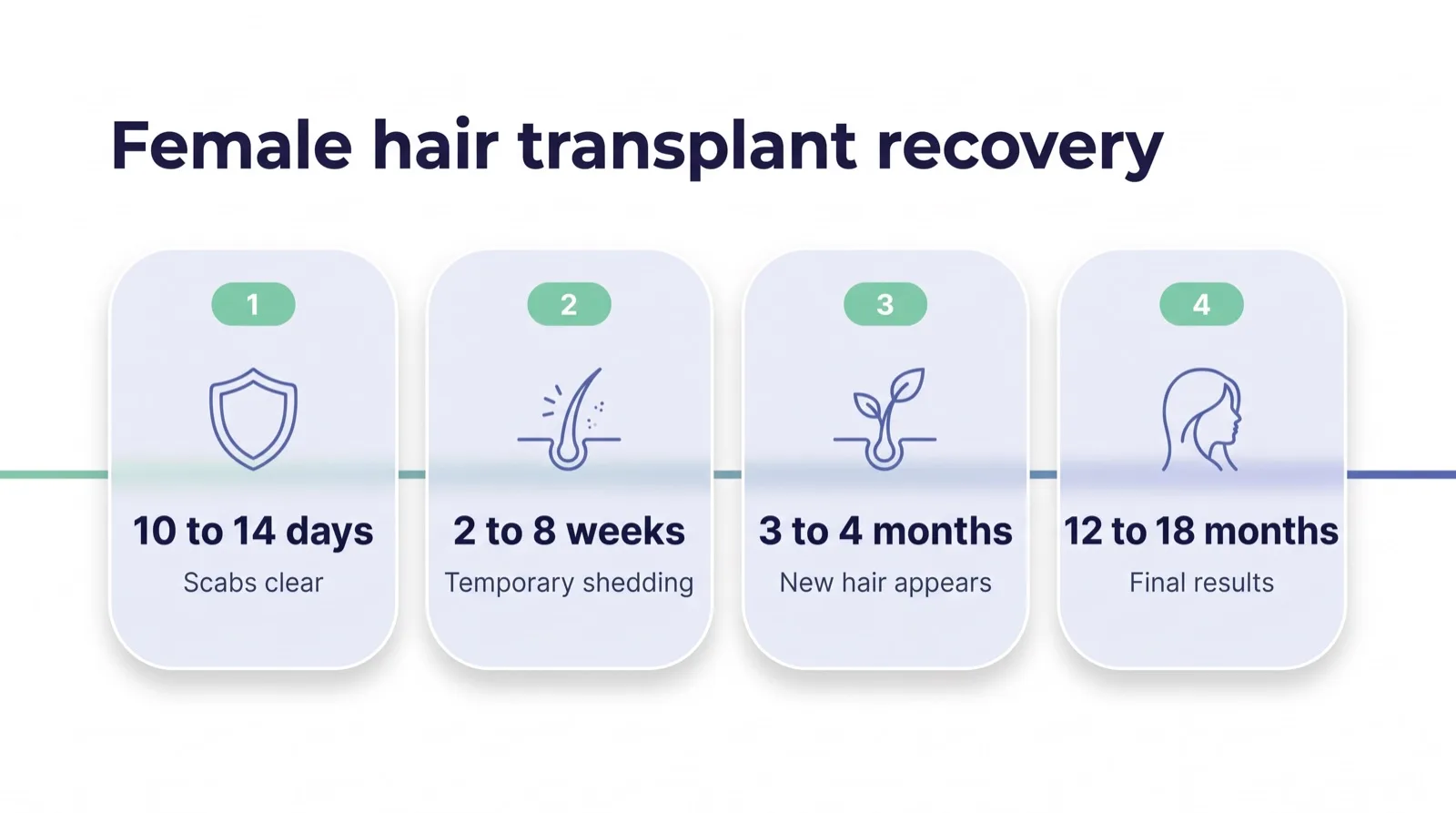
New hairs usually appear around month 3 or 4. They are often fine at first and may grow unevenly.
Between months 6 and 12, the new hair thickens and the difference in density becomes clear. This is when many women start to feel more confident styling their hair.
Hair continues to mature in texture and thickness for up to 18 months. Female hair loss often involves fine hair, so it may take longer before the full result is visible.
The biological healing process is the same with both approaches. The difference is appearance: with an unshaven DHI procedure, the recipient area is hidden by existing hair, so most women can return to social life sooner.
Long hair needs gentle handling. Avoid tight ponytails, buns, hair clips and brushing over the grafts for the first weeks. To learn more about how hair transplantation without shaving works, read our guide: Do Women Need to Shave Their Head for a Hair Transplant?
During early recovery, use the shampoo and washing method recommended by your clinic. Let the recipient area air dry and avoid pulling on the grafts. Restart styling products, heat and chemical treatments only after the scalp has healed and your surgeon has cleared the specific activity.
Avoid heavy exercise, saunas, steam rooms, swimming and direct sun for about four weeks. Light walking is fine in the first days.
| Hair care | When it is usually safe again |
|---|---|
| Gentle brushing away from the grafts | After the first week |
| Loose hairstyles | After about 2 weeks |
| Blow drying with heat | After scalp healing and surgeon clearance |
| Straighteners and curling tongs | After scalp healing and surgeon clearance |
| Hair colouring and chemical treatments | At least 4 weeks, then only if healed and cleared |
These are separate activities, not a single return-to-styling date. There is no universal evidence-based week for restarting heat tools; wait for a healed scalp and your surgeon’s clearance. Physician guidance published by the IAHRS advises waiting at least four weeks before colouring, with longer delays if irritation or incomplete healing remains.[5][6]
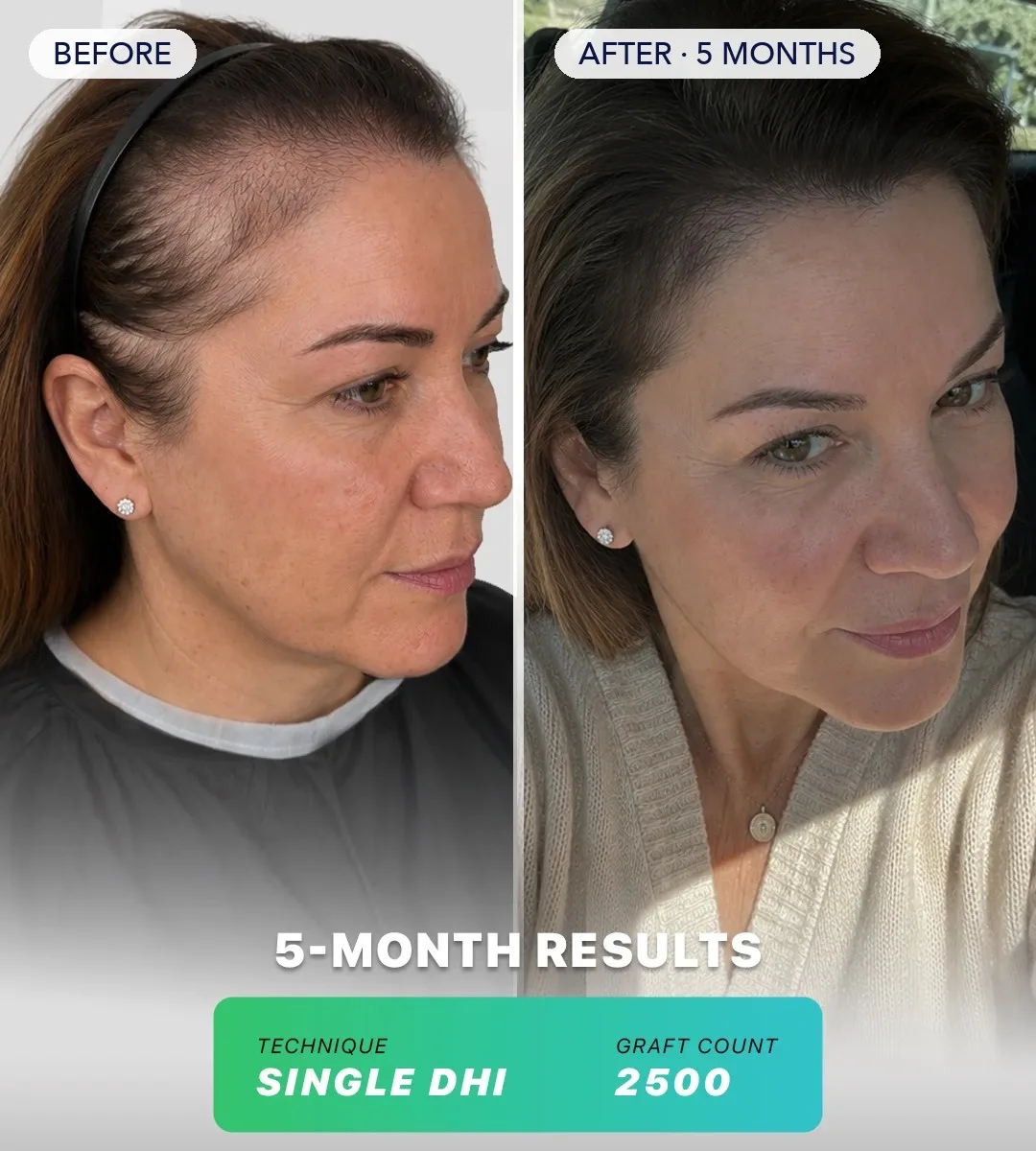
An assessment should distinguish stable female pattern hair loss from other causes and check that the donor hair is suitable before surgery is planned.[2]
Female hair loss can be linked to hormones, thyroid function, iron levels, stress or autoimmune conditions. Understanding the cause before surgery is essential. Esvita Clinic guarantees graft survival, except in patients with underlying conditions such as hormonal disorders or alopecia areata, where grafts may not take. This is explained before treatment and the patient’s consent is taken.
Women with strong donor hair at the back of the head generally have better outcomes. A single DHI session at Esvita Clinic can transplant up to 4,000 grafts when the donor area allows.
A transplant does not stop natural hair loss in other areas. Your doctor may recommend treatments such as PRP, and one PRP session is included in the Esvita Clinic package.
Esvita Clinic hosts patients for 2 nights for a single session, with transfers included. Most women fly home after the first wash and check the day after surgery. Wear a button-up top for travel so you do not need to pull clothes over your head.
After you return home, follow-up continues online, with frequent check-ins in the first month and monthly follow-ups after that. Seek medical help locally if you notice signs of infection, such as spreading redness, pus or a high temperature.
“Recovery for women is usually gentle, but understanding the cause of hair loss is essential. We look at hormones, thyroid function and iron levels before surgery, because managing the underlying cause protects the result.”
Esvita Clinic Head of Hair Restoration
Most women describe recovery as mildly uncomfortable rather than painful. Tenderness in the donor area is the most common complaint and usually eases within a few days with the medication provided.
Follow your clinic’s washing plan until the scalp has healed. Heat styling needs separate clearance; there is no fixed date for everyone. Wait at least four weeks before colouring and longer if the scalp is still irritated or your surgeon advises it.[5][6]
Many women return to desk-based work within a few days. Because the recipient area is not shaved, the procedure is usually easy to conceal.
Sources accessed on 28 October 2026. Reference numbers in the text link to the source pages.
1. NHS. Hair transplant: costs, suitability, recovery and risks.
2. International Society of Hair Restoration Surgery. A guide to hair transplant for women.

As our basic philosophy, we prioritize the long-term happiness and
satisfaction of our patients above all else.


Contact with our experts and learn about your options! Or fill the form right side and we will call you