Let's Have a Chat

 menu
menu


Key facts
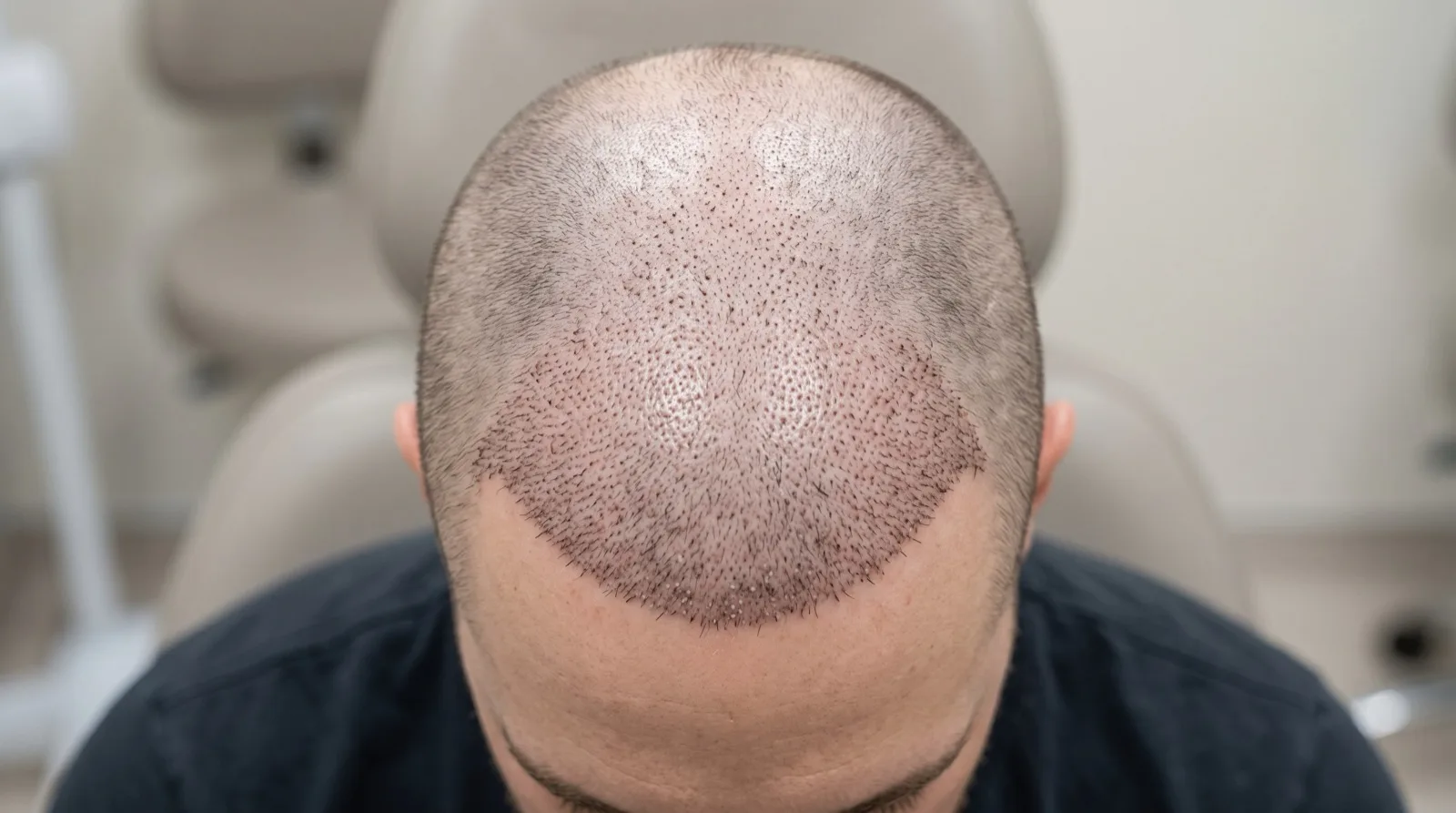
The surgery is only the first part of a successful result. In the days after hair transplant treatment in Turkey, the grafts are still anchoring into the scalp and can be dislodged by rubbing, pressure or knocks. Good aftercare protects the grafts, supports healing in the donor area and lowers the risk of infection. For UK patients, it also means planning how recovery will continue once they are home.
Do not touch, scratch or rub the transplanted area. Avoid wearing tight hats, and be careful when getting into cars or walking through low doorways. If the area itches, do not scratch it. Your team will tell you what you can use to relieve itching.
The donor area at the back of the head may feel tender, and small red dots are normal where follicles were extracted. A dressing may be applied after surgery and removed at the clinic. Follow your instructions for cleaning this area, as it usually heals quickly.
Some swelling on the forehead is common between the second and fourth day, and it may move down towards the eyes before it settles. Sleeping with your head raised and following your medication instructions help reduce it. Swelling is temporary and does not affect the grafts.
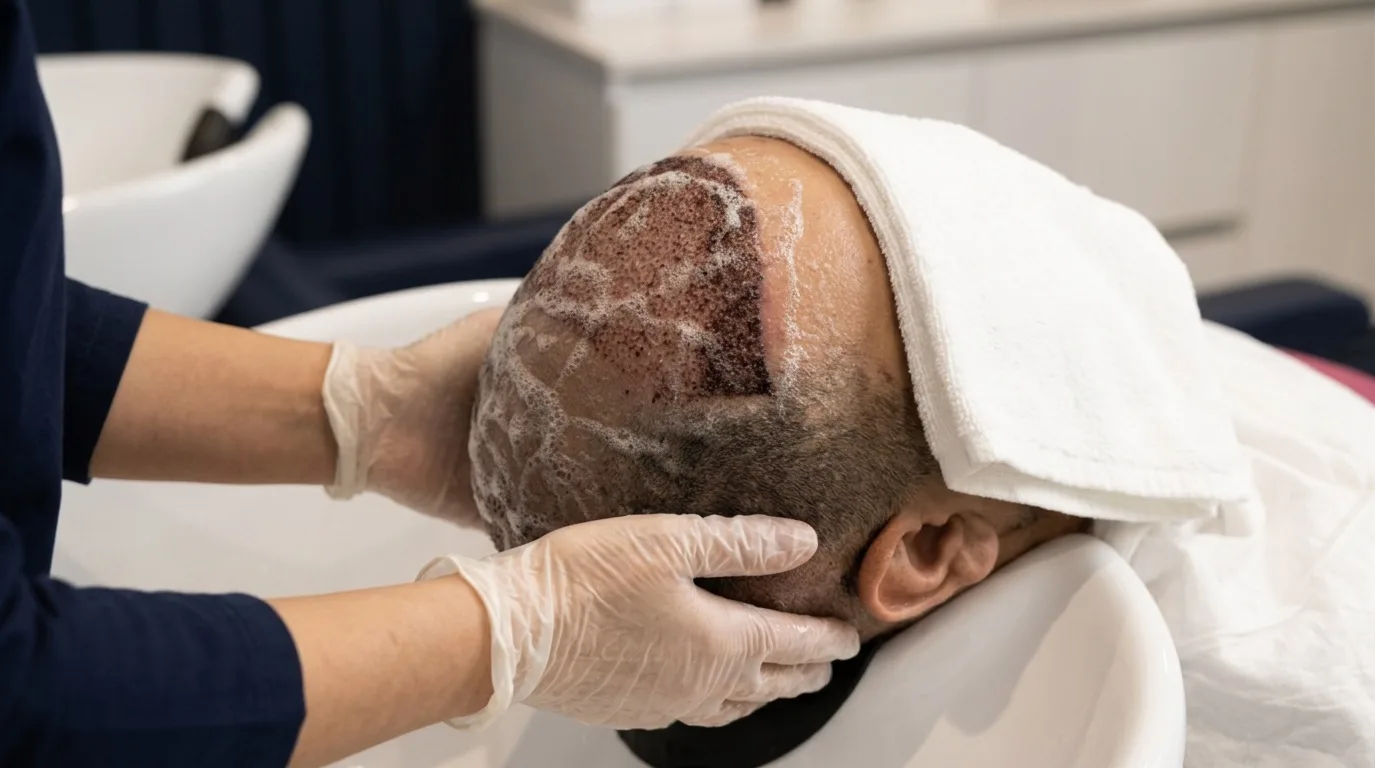
At Esvita Clinic, the first wash is carried out by the team at the clinic the day after the procedure. This is also when your first check takes place. The team will show you how to wash at home, and you will receive the special shampoo included in your package.
Published aftercare schedules differ. NHS guidance describes gentle hand-washing from day 6, while the American Society of Plastic Surgeons notes that gentle washing may start within two days. Use Esvita Clinic’s supervised first wash and your written personal instructions as the guide.[1][2]
For the first two weeks, apply the shampoo lather gently with your fingertips, without rubbing the grafts. Use lukewarm water with low pressure, ideally poured from a cup rather than directly from a strong shower. Pat the donor area dry with a soft towel and let the transplanted area air dry. Do not use a hair dryer on high heat.[5]
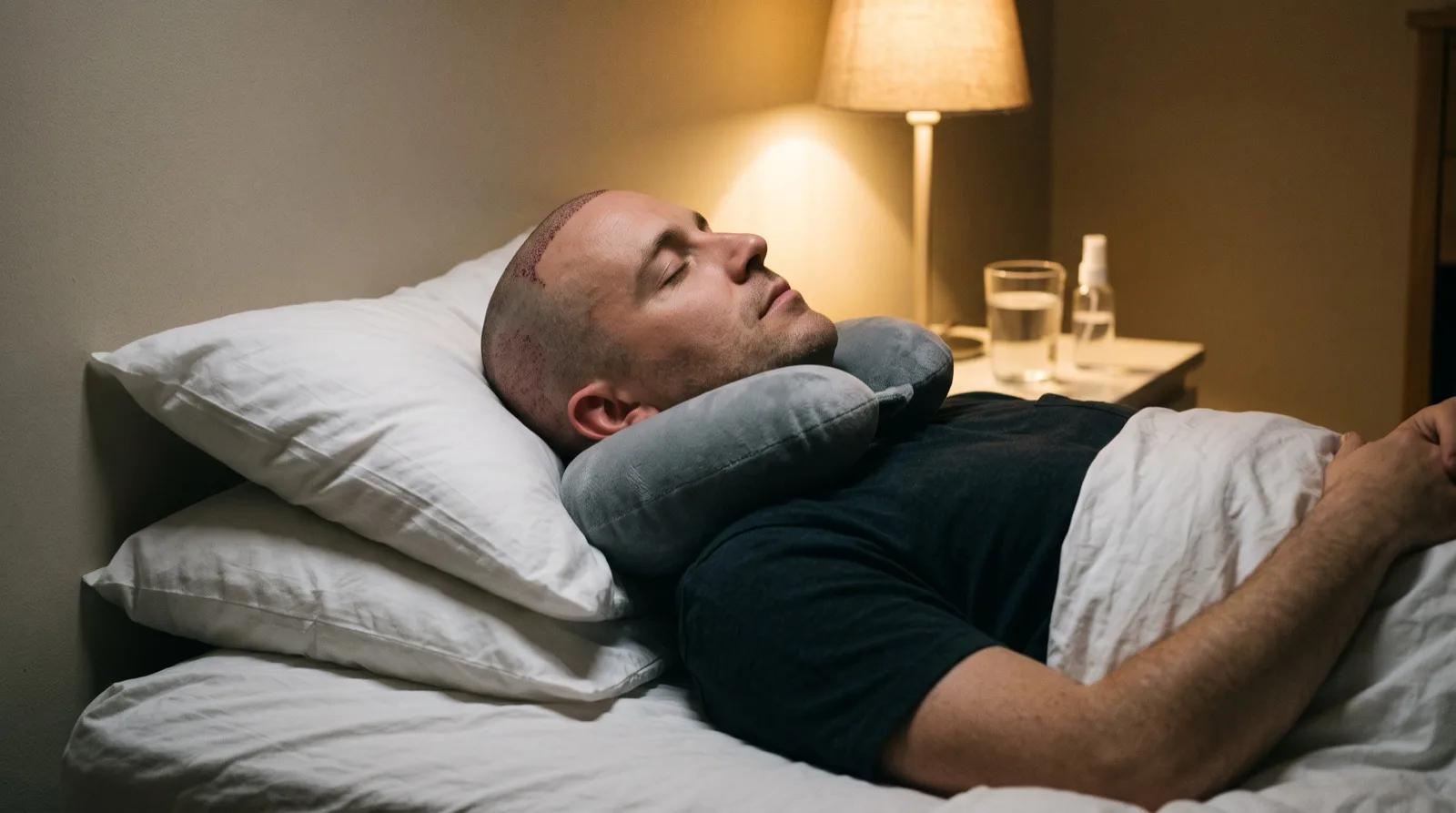
Use a raised sleeping position that keeps the treated area clear of the pillow, following your surgeon’s instructions. The angle and number of nights depend on graft location, swelling and healing; there is no single schedule that suits everyone.[4]
The neck pillow included in the Esvita Clinic package helps you keep your head stable and stops you from rolling onto the grafts during sleep. Placing a clean towel over your pillow for the first nights can help with any light oozing from the donor area.
| Activity | When it is usually safe again |
|---|---|
| Light walking | From the first days |
| Desk work | After a few days, depending on how you feel |
| Gym and heavy exercise | After about 4 weeks |
| Swimming pools and the sea | After about 4 weeks |
| Direct sun without protection | Avoid for the first month, protect the scalp for longer |
| Loose hat or cap | Usually after about 10 days |
| Smoking and alcohol | Avoid for at least 2 weeks, longer is better |
Your doctor’s instructions always come first, as these timings can vary from patient to patient.
Sweating, raised blood pressure and impact can disturb the grafts in the early weeks. Light walking is fine, but avoid lifting heavy weights, running and contact sports until you are cleared.[2]
Strong sun can damage the healing scalp and lead to discolouration. Chlorine and seawater can irritate the skin and increase the risk of infection. When you are ready to wear a cap, choose a loose one that does not press on the grafts.
Smoking reduces blood flow to the scalp, which can affect graft survival. Alcohol can increase swelling and may interact with medication. Avoiding both supports better healing.
Small scabs form around the grafts in the first days. With regular gentle washing, they usually fall off within 10 to 14 days. Redness gradually fades over the following weeks.[4]
Transplanted hair shafts commonly shed during the weeks after surgery before new growth begins. This expected shedding is different from shock loss, which affects existing hair near the treated area. Shock loss often improves, but already weakened hairs may not fully recover.[3][1]
New hair usually starts appearing around month 3 or 4, becomes visibly thicker between months 6 and 9, and reaches its final look at 12 to 18 months. To understand what happens after that, read our guide on how long a hair transplant lasts.
At Esvita Clinic, follow-up continues online after you return to the UK. During the first month, check-ins are frequent, and after that they continue monthly. Sharing clear photos at each stage allows the team to monitor healing and growth and answer your questions.
Seek medical help locally if you notice spreading redness, increasing pain, pus, a high temperature or swelling that keeps getting worse. These can be signs of infection and should be checked promptly. Let your clinic know as well, so that they can support you.
Before treatment, ask what aftercare is included, how long follow-up continues and who to contact if you have concerns. At Esvita Clinic, the package includes medication, shampoo, a neck pillow and one PRP session, along with ongoing online follow-up.
Grafts that are protected in the first two weeks have the best chance of survival. Careful washing, safe sleeping and avoiding pressure on the scalp make a real difference to the final density.
A transplant does not stop natural hair loss in untreated areas. Your doctor may suggest treatments such as PRP or medication to help protect your existing hair over time.
“The first week decides a lot. Grafts are most vulnerable in the first days, so gentle washing, sleeping with the head raised and avoiding friction protect the result far more than any product.”
Esvita Clinic Head of Hair Restoration
Esvita Clinic’s travel plan usually allows patients to fly home after the first wash and check, carried out the day after the procedure, if the team confirms that they are fit to travel. Wear loose or button-up clothing and avoid lifting bags in a way that could knock your head.
Return to your normal sleeping position when your surgeon confirms that it will not put pressure or friction on the treated area. This depends on graft location and healing, rather than a fixed date for every patient.
Many patients with desk jobs return to work within a few days to a week. Redness and scabs may be visible for around 10 to 14 days, so some patients prefer to take longer off. Physically demanding jobs may require more time.
Sources accessed on 28 October 2026. Reference numbers in the text link to the source pages.
1. NHS. Hair transplant: costs, suitability, recovery and risks.
2. American Society of Plastic Surgeons. Hair transplantation and restoration: recovery.

As our basic philosophy, we prioritize the long-term happiness and
satisfaction of our patients above all else.


Contact with our experts and learn about your options! Or fill the form right side and we will call you