Let's Have a Chat

 menu
menu


Key facts
Many people expect implant surgery to be very painful, but for most patients the experience is closer to a tooth extraction than to major surgery. During dental implant treatment, the area is fully numbed before the dentist begins, so you should not feel pain while the implant is placed.
Local anaesthesia blocks pain signals from the treated area. You will stay awake and may feel pressure, vibration or the sound of the instruments, but not sharp pain. If you feel any discomfort during the procedure, the dentist can give more anaesthetic. For patients who feel very anxious about dental treatment, sedation can help them stay relaxed. At Esvita Clinic, sedation can be offered after an assessment of the patient’s health and suitability.[1]
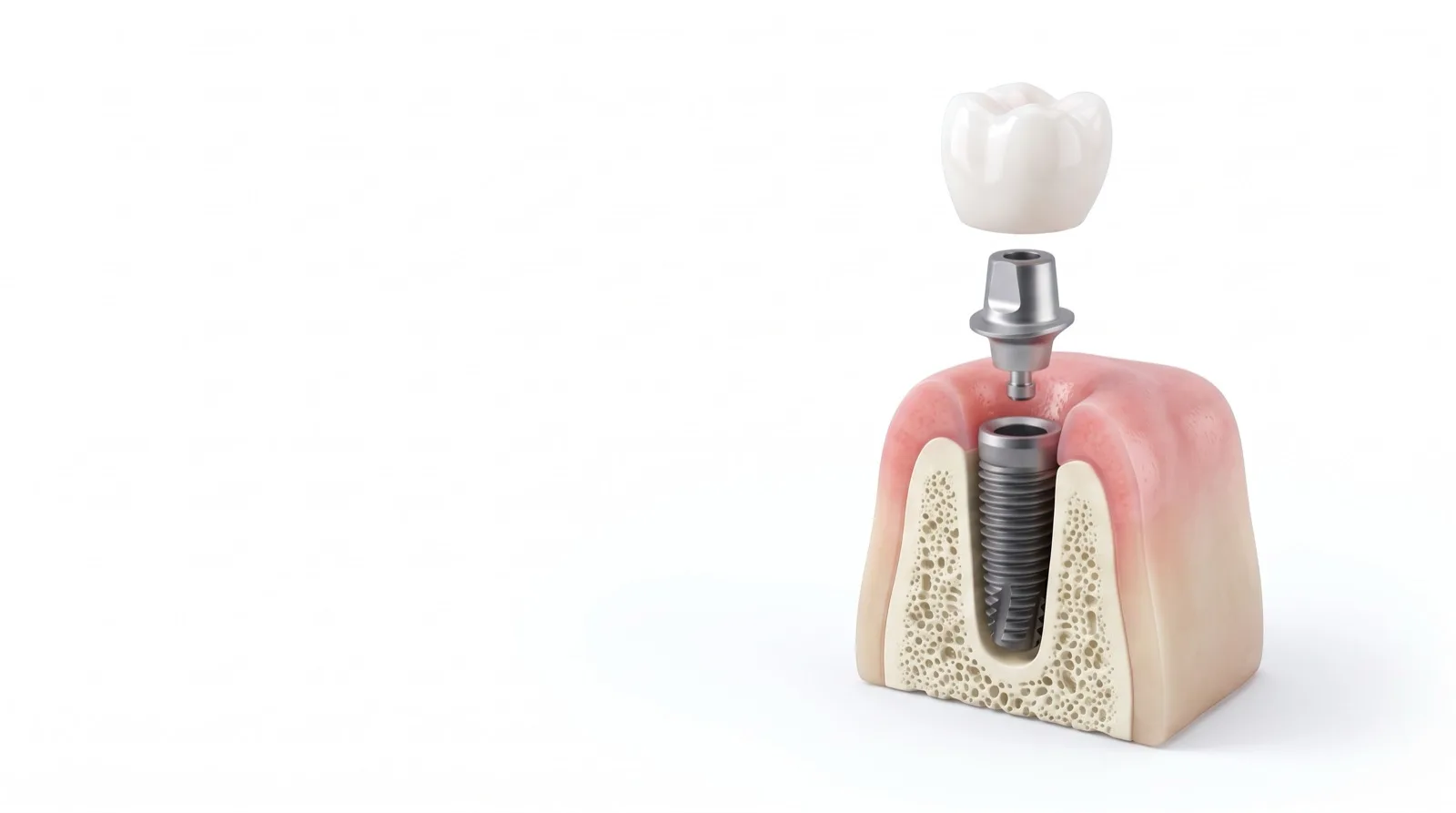
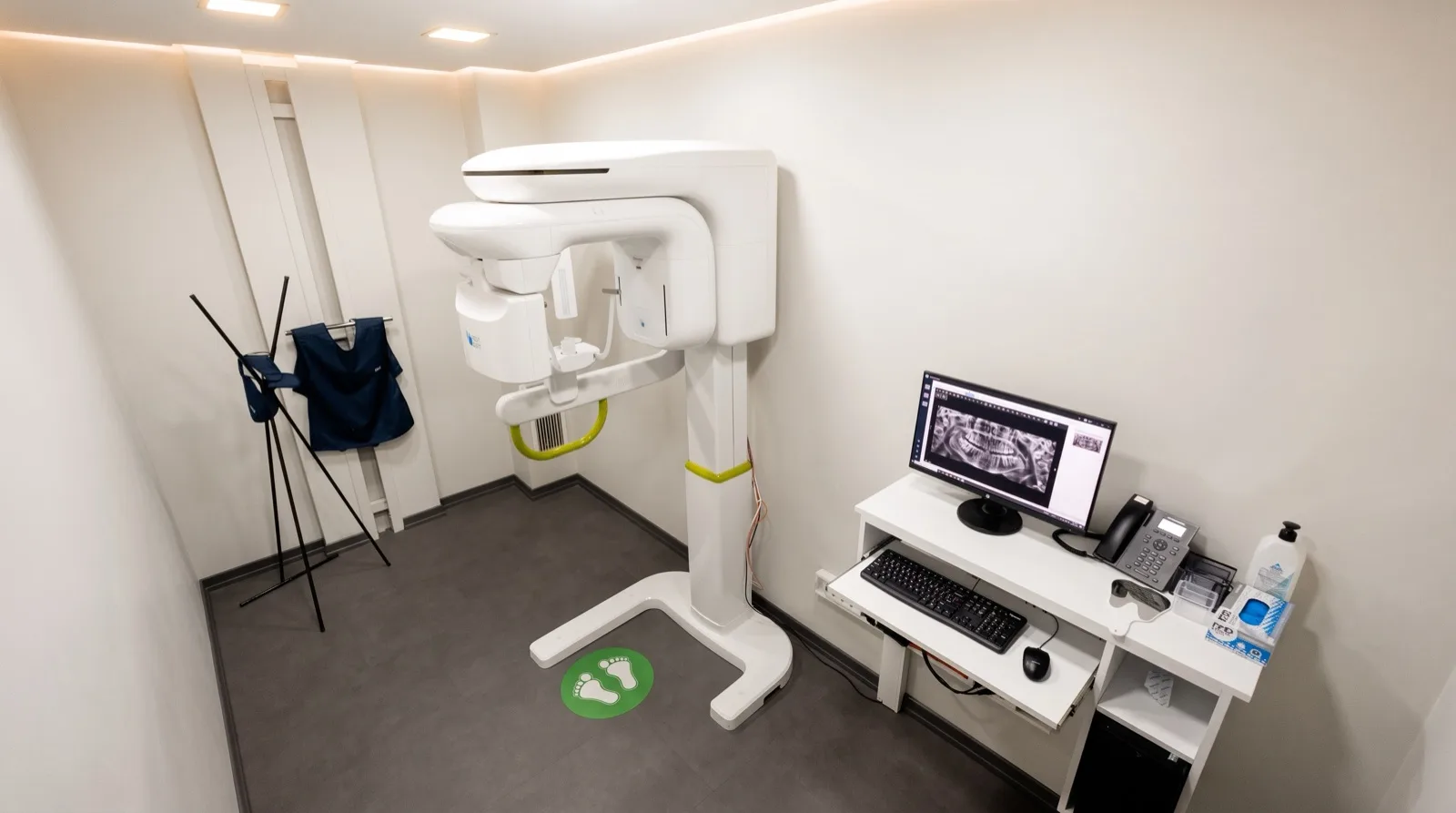
The dentist makes a small opening in the gum, prepares a precise space in the jawbone and places the titanium implant. The gum is then closed, sometimes with a few stitches. The position and depth of each implant are planned beforehand using a 3D CBCT scan. Placing a single implant often takes less than an hour, while multiple implants or full-arch treatment take longer.[1]
Once the anaesthetic wears off, usually within a few hours, it is normal to feel some soreness. Most patients describe it as mild to moderate and manageable with the medication prescribed by their dentist.
Soreness is common during the first few days. You may feel aching in the jaw, gum tenderness and slight bleeding or oozing. Use pain relief as prescribed and follow the instructions supplied with your medicine.
Swelling and bruising can follow implant surgery and are often most noticeable during the first two to three days, although the timing varies. Follow your team’s advice about cold compresses and contact them if swelling keeps increasing or you feel unwell.[3][4]
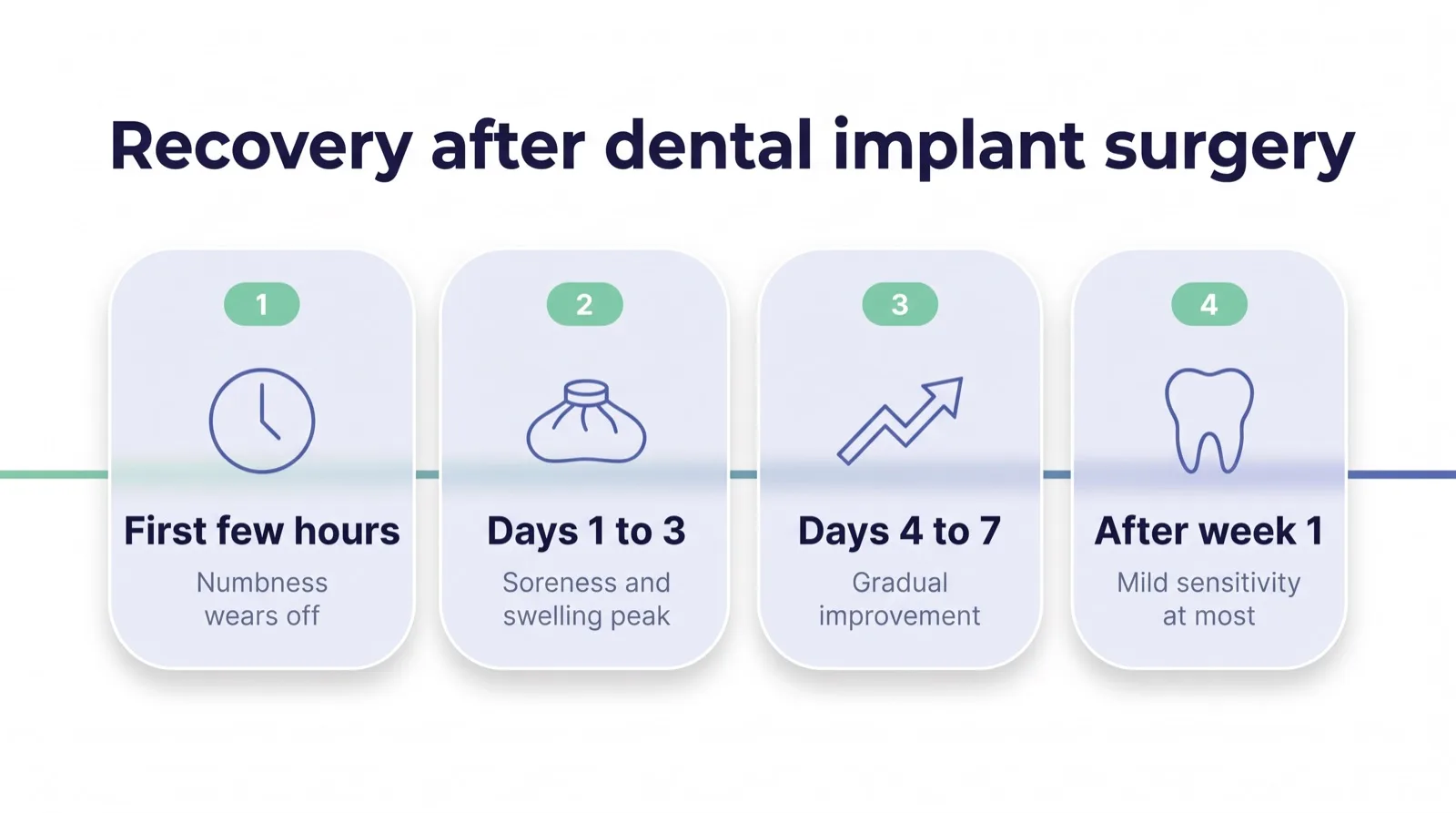
For a straightforward implant, most discomfort fades within three to five days, and many patients return to normal daily activities within a day or two. By the end of the first week, the gum is usually much less tender, although it may still feel sensitive when chewing on that side.[2]
| Time after surgery | What you may feel |
|---|---|
| First few hours | Numbness as the anaesthetic wears off |
| Days 1 to 3 | Soreness, swelling and tenderness, usually at their peak |
| Days 4 to 7 | Gradual improvement, swelling settling |
| After the first week | Mild sensitivity at most, healing continues under the gum |
Every patient heals differently. Pain tolerance, general health, bone quality, smoking and how closely aftercare instructions are followed all influence how recovery feels. Two people having the same procedure may describe it very differently.
A single implant in healthy bone usually causes less discomfort than several implants placed at once or a full-arch procedure such as All-on-4 or All-on-6. Longer procedures and more extensive work in the gum generally mean more swelling afterwards.
If you need bone grafting, a sinus lift or extractions on the same day, recovery may take a little longer and swelling may be more noticeable. Your dentist should explain this in your treatment plan so that you know what to expect.

Take pain relief, anti-inflammatory medicines or antibiotics only as prescribed. Follow the prescribed course and contact the clinical team if you have side effects or questions rather than changing it yourself. Antibiotics are not needed for every implant procedure.[3] At Esvita Clinic, prescribed postoperative medication is provided by the clinic.
Keep the area clean, but be gentle. Avoid brushing directly over the surgical site for the first day, then follow your dentist’s instructions for rinsing and cleaning. Choose soft, lukewarm foods such as soups, yoghurt, scrambled eggs and mashed vegetables. Avoid very hot, hard, crunchy or spicy foods, and do not smoke or drink alcohol while the area heals, as both slow healing and increase discomfort.
Discomfort should gradually ease each day. If pain becomes stronger after the third day, or if it does not respond to the prescribed medication, contact your dentist so the area can be checked.[2]
Contact your dental team if you notice:
For implant treatment, Esvita Clinic usually hosts patients for 2 to 3 nights in Istanbul. This gives the team time to check the area after surgery, explain your aftercare instructions and make sure you are comfortable before you travel home. You will return about 3 months later for a second visit of around 7 days, when the final teeth are fitted after the implants have fused with the bone.
After you return to the UK, Esvita Clinic’s medical consultants stay in touch by WhatsApp and phone, and an online meeting with the doctor can be arranged if you have concerns. It is helpful to keep your local dentist informed as well. If you are still choosing a clinic, our guide to dental implant safety checks explains what UK patients should ask before travelling.
“Most patients are surprised by how manageable the procedure feels. Many expect it to be worse than an extraction and tell us afterwards that it was easier. Taking the prescribed medication on time makes the first two days much more comfortable.”
Esvita Clinic Head of Dentistry
Many patients say it feels similar to, or even easier than, having a tooth removed. Implant placement is a planned procedure in a controlled area, while extractions can sometimes involve more pressure. Recovery after a simple implant is often comparable to recovery after an extraction.
Local anaesthesia stops you from feeling pain during the procedure, although you may still feel pressure and movement. Some soreness after the anaesthetic wears off is normal and can be managed with medication.
Mild sensitivity can be normal after a week, especially after multiple implants or bone grafting. Strong or increasing pain is not typical at this stage and should be checked by your dentist.
Sources accessed on 28 October 2026. Reference numbers in the text link to the source pages.
1. Cambridge University Hospitals NHS Foundation Trust. Insertion of dental implants.
2. Guy’s and St Thomas’ NHS Foundation Trust. After having a dental implant.
3. Leeds Teaching Hospitals NHS Trust. Dental implants: patient information.

As our basic philosophy, we prioritize the long-term happiness and
satisfaction of our patients above all else.


Contact with our experts and learn about your options! Or fill the form right side and we will call you