Let's Have a Chat

 menu
menu


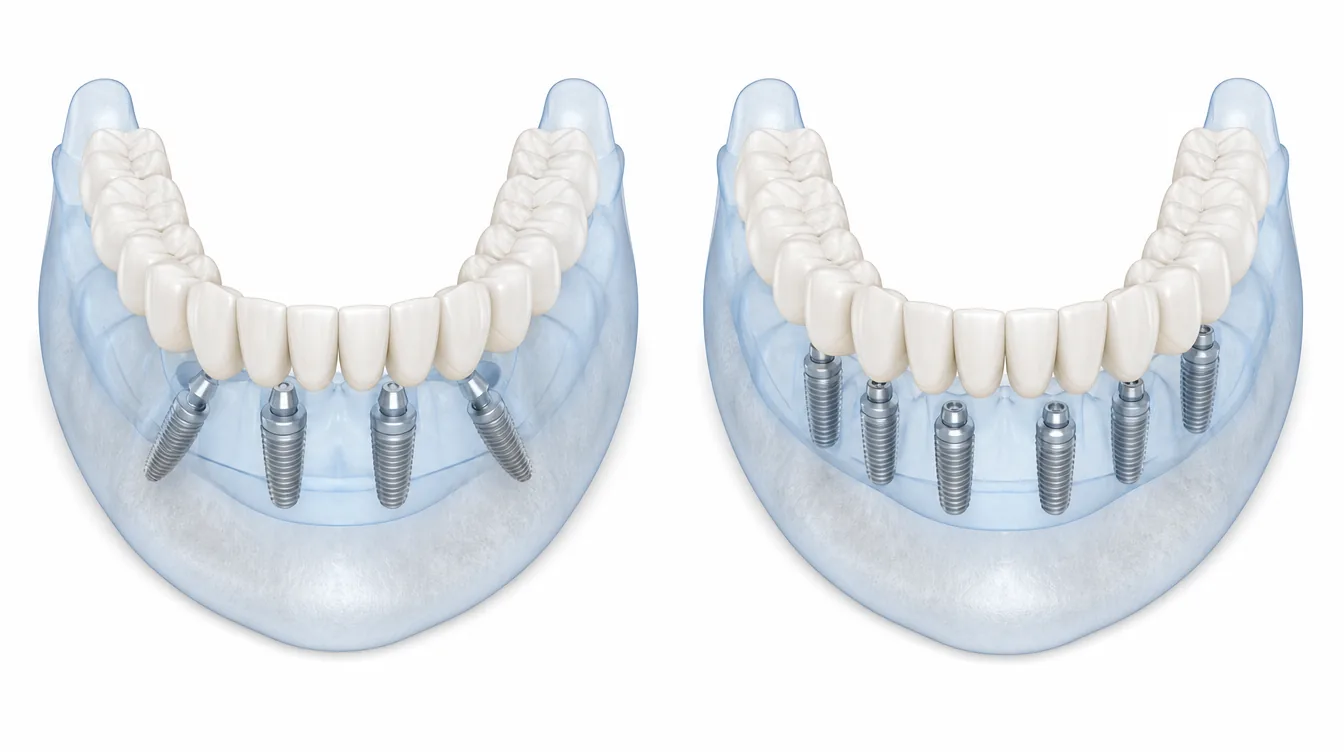
All-on-4 uses four implants to support a full arch of fixed teeth, while All-on-6 uses six. Both replace an entire upper or lower set of teeth with a fixed bridge that does not come out at night. The right choice is not about which number is bigger. It depends on how much healthy jawbone you have, the shape of your arch, your general health and what your dentist sees in your scans.
This guide explains how the two approaches differ, who each one tends to suit and what to ask before you decide.
Key facts
The core difference is the number of implants holding the bridge, and that changes how the implants are placed and how chewing forces are shared. If you are researching All-on-4 dental implants in Turkey or All-on-6 dental implants in Turkey, it helps to understand both before your consultation.
| All-on-4 | All-on-6 | |
|---|---|---|
| Number of implants | 4 per jaw | 6 per jaw |
| Implant position | 2 straight at the front, 2 angled at the back | Spread along the arch, mostly upright |
| Bone needed | Less; angled rear implants make use of available bone | More, including toward the back |
| Bone grafting | Often avoidable | Applicable if bone is limited |
| Bone density | Works well in denser bone | Often preferred for soft or uneven bone |
| Jaw | Often sufficient in the lower jaw | Often preferred in the upper jaw |
| Bite force | Normal bite forces | Strong bite or bruxism (grinding, clenching) |
| Support | 4 anchor points | 6 anchor points; chewing pressure spread more evenly, with shorter cantilevers |
| Treatment | Less invasive, fewer implant sites | Two additional implant sites |
Your CBCT scan, not the number itself, decides which column fits you. Research shows that All-on-4 and All-on-6 have similar success rates when the treatment is planned around each patient’s jawbone and bite.
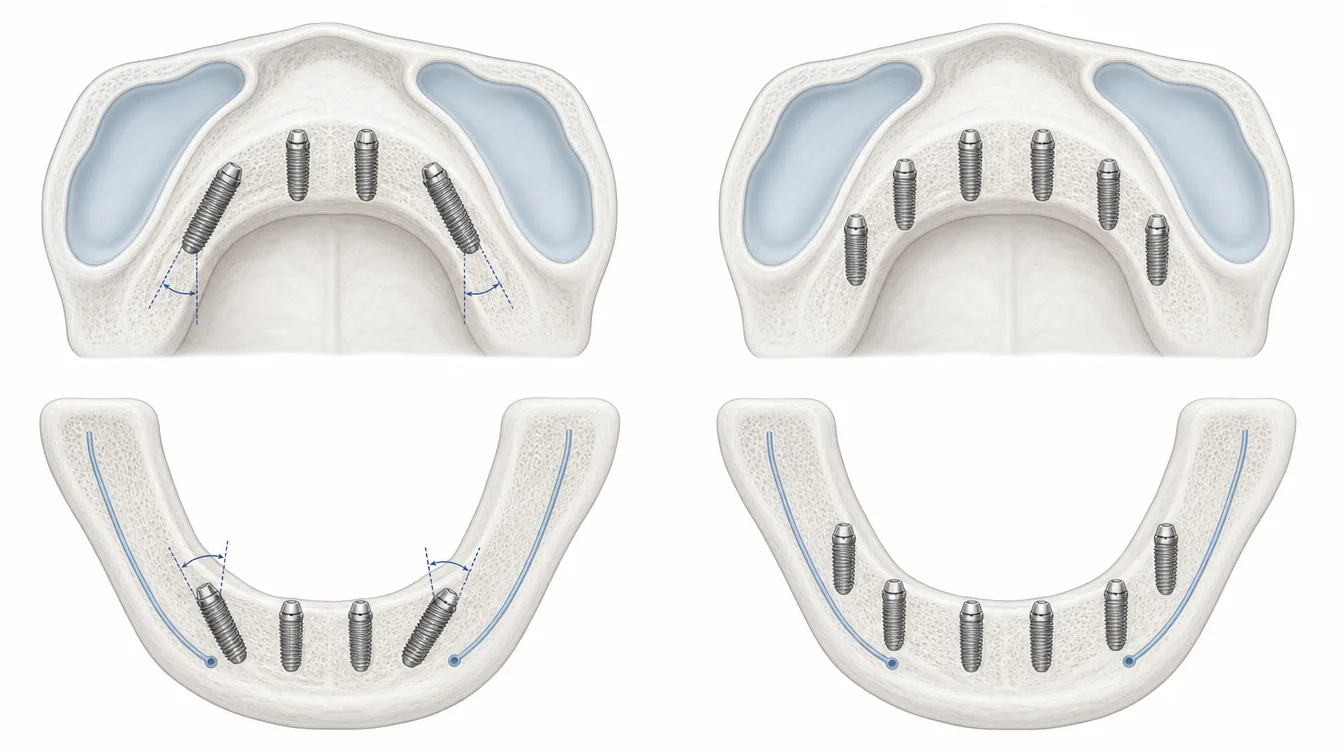
In All-on-4, two implants are placed straight in the front of the jaw. The two back implants are angled, often up to about 45 degrees. Angling lets longer implants reach denser bone while avoiding the sinuses in the upper jaw and the nerve in the lower jaw.
In All-on-6, six implants are spread more evenly along the arch. They are usually placed more upright, with additional implants toward the back of the mouth.
More implants mean more anchor points. With six implants, chewing pressure is spread more evenly, which reduces the stress on each implant. This can add stability, especially in the upper jaw where bone is often softer.
The extra implants can also shorten the cantilever, the part of the bridge that extends beyond the last implant. A shorter cantilever gives the back teeth better support.
The trade-off is bone. Six implants need enough bone volume in more places along the jaw. All-on-4 was designed partly to work with less bone, so it can be an option for patients who would otherwise need grafting.
Bone is usually the deciding factor. An implant needs enough healthy bone around it to fuse securely, a process called osseointegration.
After teeth are lost, the jawbone gradually shrinks because it no longer receives stimulation from chewing. The longer teeth have been missing, or the longer someone has worn a removable denture, the more bone may have been lost.
The lower jaw tends to have denser bone, which is why All-on-4 is often sufficient there. The upper jaw is usually softer and may need broader support. When bone is limited at the back of the jaw, the angled implants of All-on-4 can make use of the stronger bone toward the front and may reduce the need for grafting.
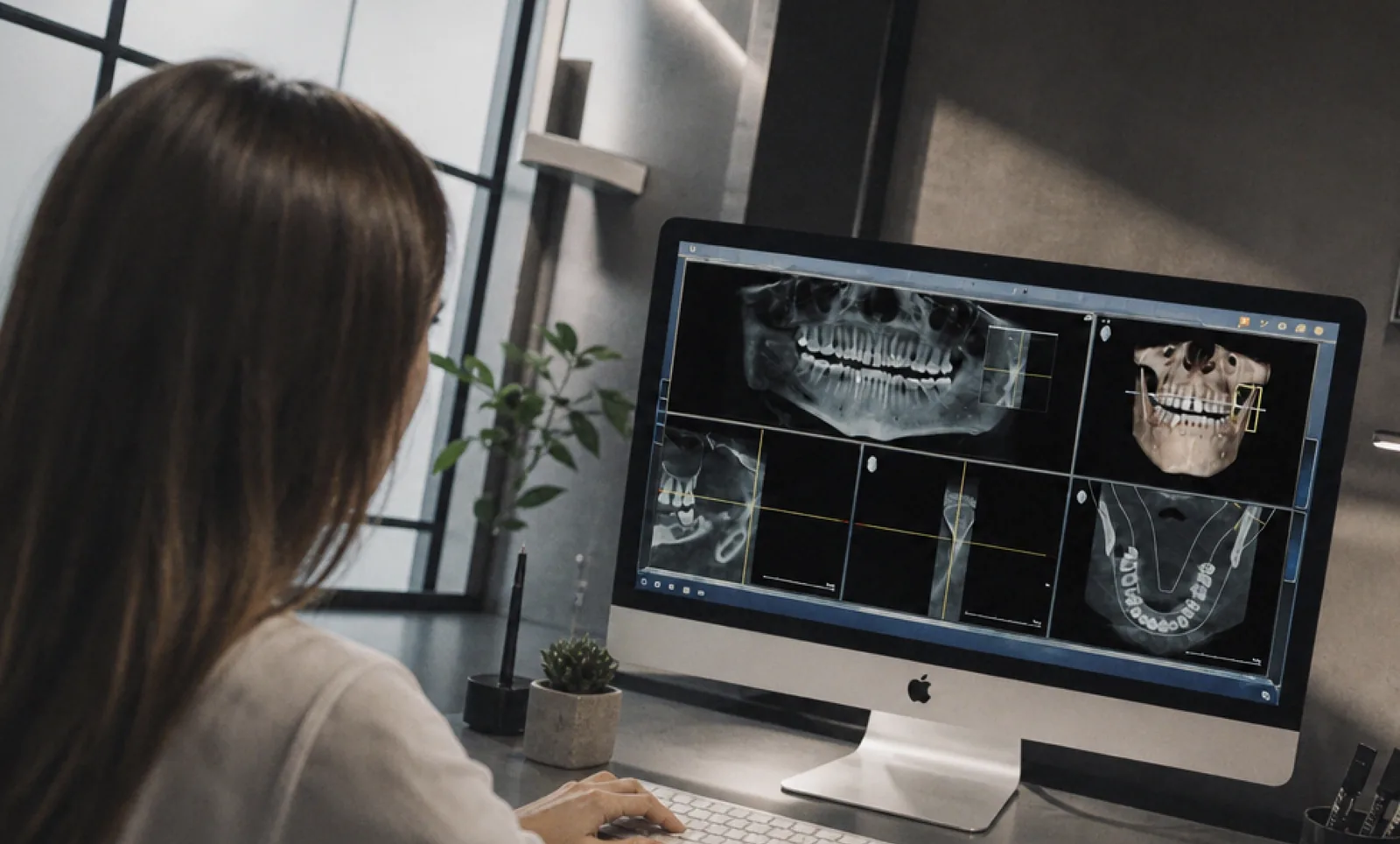
A 3D CBCT scan shows bone volume, density and the position of the sinuses and nerves. Based on this, your dentist may suggest a bone graft or sinus lift to create enough support, particularly for All-on-6. In cases of severe bone loss, other approaches such as zygomatic implants may be discussed. These decisions can only be made after imaging and a clinical examination.
Not sure how much bone you have? Send us your photos or X-ray for a free online assessment.
Both treatments are forms of full mouth dental implants, designed for people missing all or most of their teeth in one or both jaws. Neither is automatically better; each fits a different clinical picture.
These treatments are commonly considered by people who:
When All-on-4 makes sense: All-on-4 is a well-established option. It is commonly chosen when:
When All-on-6 makes sense: All-on-6 adds two support points to the bridge. It may be preferred when:
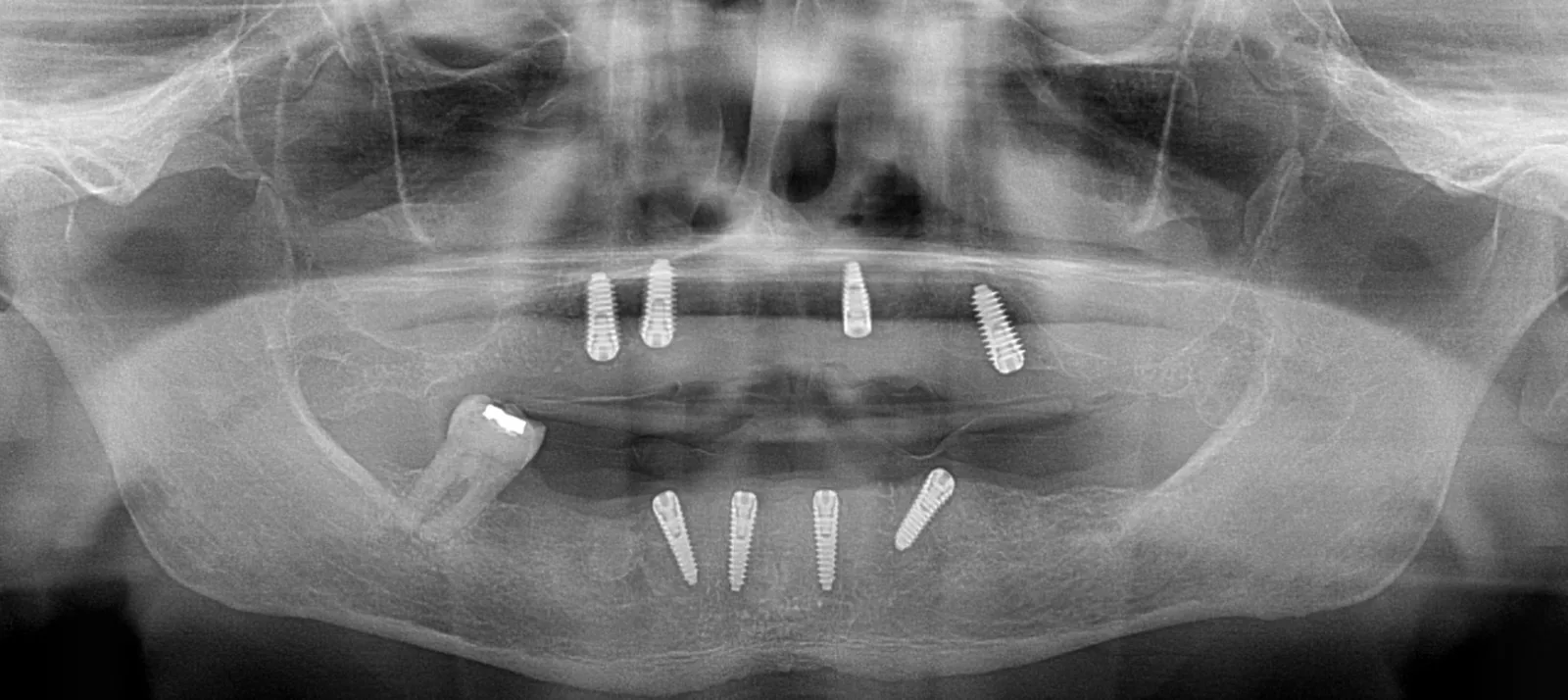
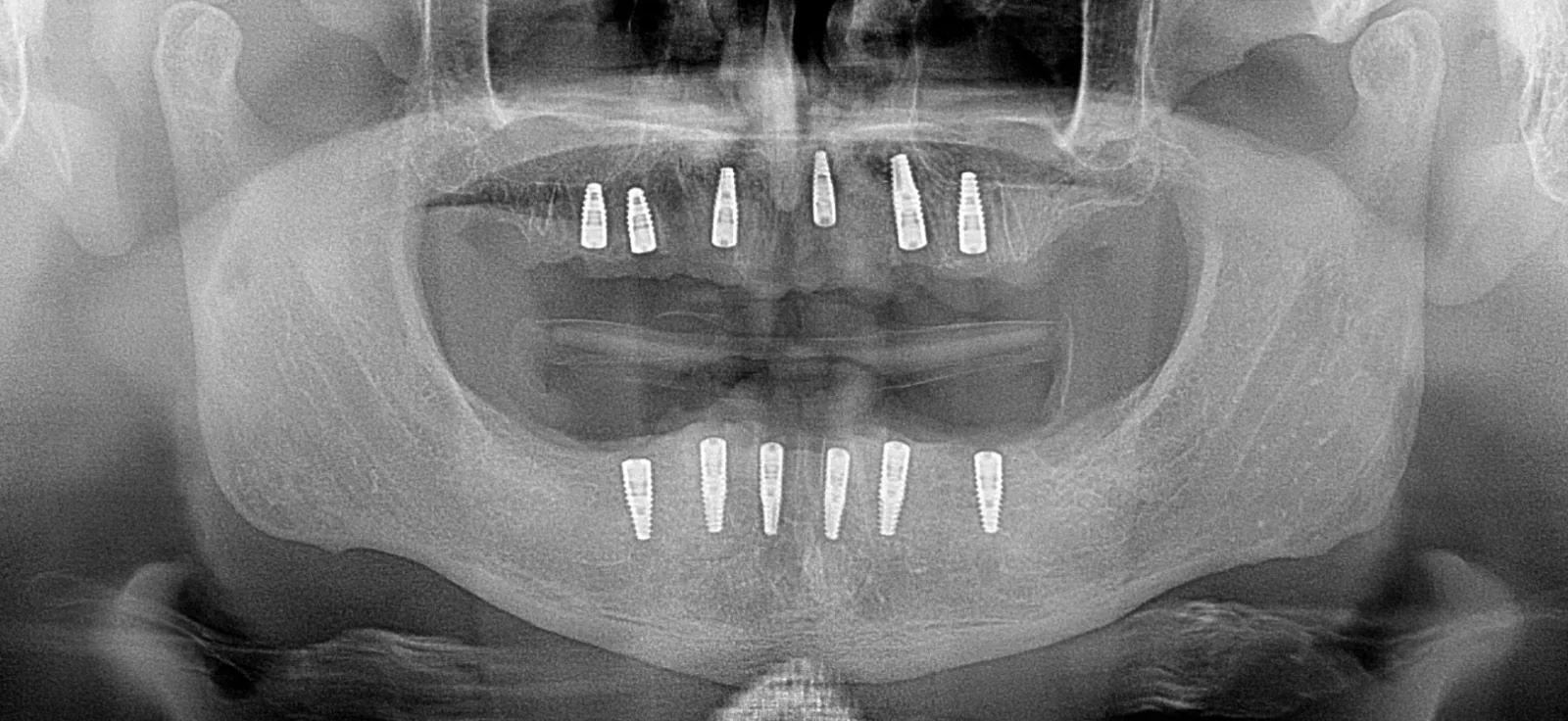
General health matters as much as bone. Uncontrolled diabetes, heavy smoking, active gum disease, certain medications that affect bone and past radiation to the jaw can all affect healing. Your dentist will review your medical history, current medications and gum health. Some conditions need to be managed first, while others may change which option is safest.
With good planning and care, both options are long-term solutions. Many patients ask how long All-on-4 dental implants last; the answer depends far more on care and health than on the number of implants alone.
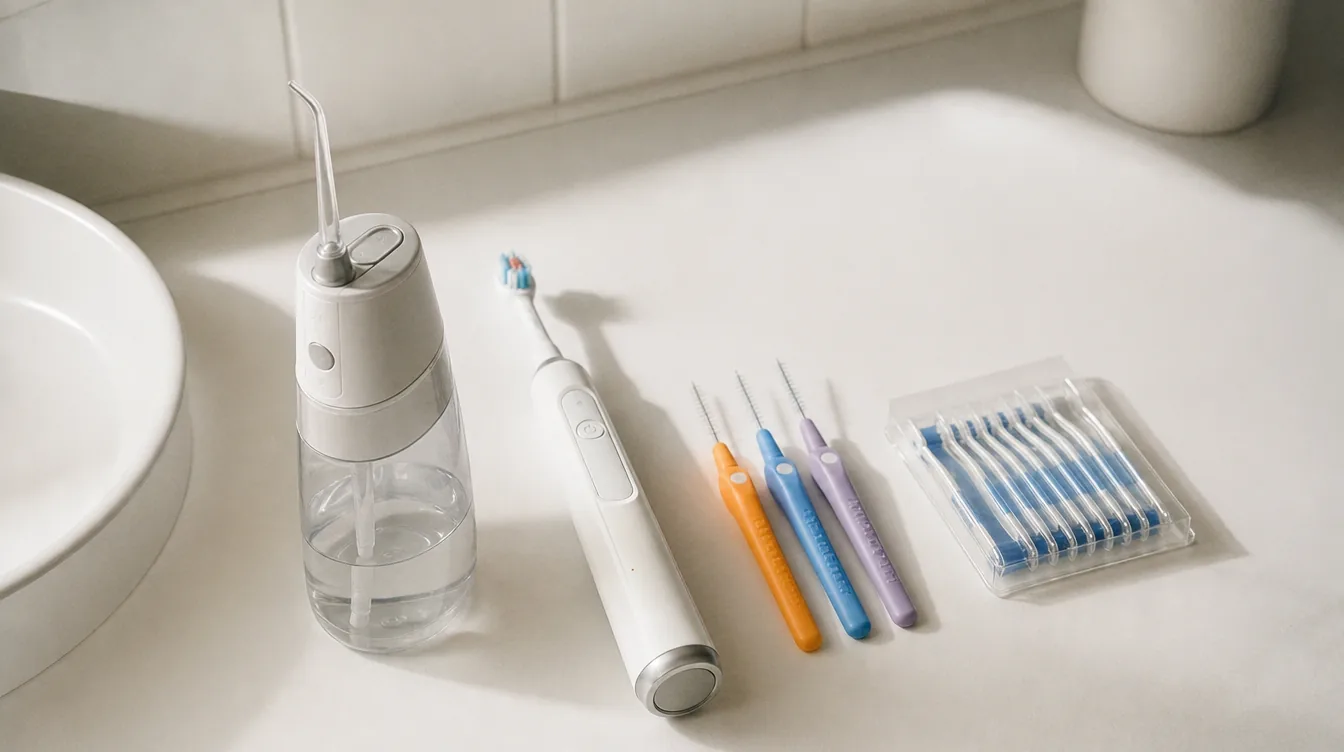
Daily care is similar for both. Good All-on-4 implant care includes:
The biggest risk to any implant is peri-implantitis, an infection of the gum and bone around it. Smoking, poorly controlled diabetes, skipped check-ups and teeth grinding all raise this risk. If you grind your teeth, a night guard may be recommended. The bridge itself may need repairs or replacement over the years, depending on the material used.
How the bridge is made matters as much as the number of implants. A bridge that fits the implants precisely and has a strong framework spreads chewing forces evenly. At Esvita, implant positions are measured with iCam4D photogrammetry, and every permanent bridge is built on a milled titanium bar with zirconia teeth on top.
When comparing All-on-4 and All-on-6 treatment costs, All-on-6 is usually more expensive because it uses more implants and components. However, the number of implants is only one part of the price.
Each implant adds the cost of the implant itself, its abutment and the surgical time to place it. Other factors include:
Two patients choosing “All-on-4” can have very different plans. Accurate pricing is only possible after your scans are reviewed and a personal treatment plan is prepared. Be cautious of prices quoted before anyone has seen your X-rays.
The best decision comes from a clear conversation with your dentist, based on your scans rather than general rules. These points can help you prepare:
If you travel to Istanbul for treatment, the process usually runs in five steps:
Every jaw is different. A careful examination with 3D imaging shows what is realistic for your bone, bite and health. At Esvita Clinic, our dental team reviews each case individually and explains which option fits your situation and why.
“I don’t choose between All-on-4 and All-on-6 by the number of implants. I start with the CBCT scan: where the bone is, how dense it is and how strong the patient’s bite is. When bone is limited, All-on-4 with angled implants is often the more predictable choice. When the bone is softer or the bite is heavy, especially in the upper jaw, I prefer the extra support of All-on-6.”
Esvita Clinic Head of Dentistry
You can start by sharing a recent panoramic X-ray or CBCT scan for an initial assessment.
No. Research shows that All-on-4 and All-on-6 have similar success rates when the treatment is planned around each patient’s jawbone and bite. More implants do not automatically mean a better result. The decision should come from a CBCT scan and an implant dentist’s assessment of your bone density, sinus and nerve anatomy, bite and bridge design, not from choosing the higher number as an upgrade.
Yes. Both are designed to replace a full arch of teeth in the upper or lower jaw with one fixed bridge, usually carrying 10 to 14 teeth. They can be used in one jaw or both.
Generally, yes. Six implants need enough bone in more positions along the jaw, including further back. All-on-4 uses angled rear implants to make the most of available bone toward the front, which is why it is often considered for patients with bone loss.

As our basic philosophy, we prioritize the long-term happiness and
satisfaction of our patients above all else.


Contact with our experts and learn about your options! Or fill the form right side and we will call you